
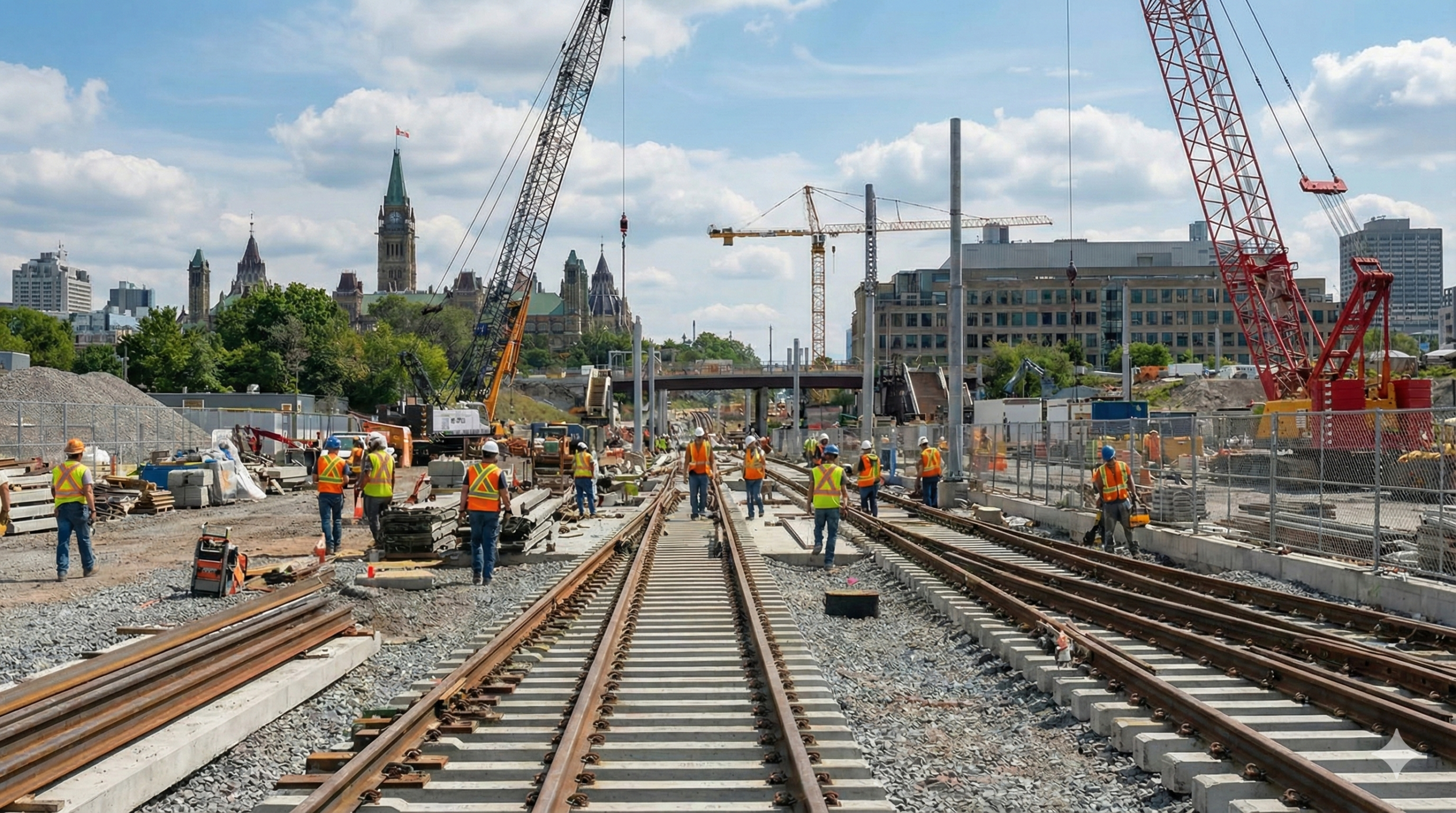
Ottawa’s light rail transit system is undergoing its largest transformation since the Confederation Line opened in 2019. The ambitious Stage 2 expansion project promises to extend rail service to 77 percent of Ottawa residents within five kilometers of a station, fundamentally changing how the city moves. But the journey has been anything but smooth, with delays, cost overruns, and ongoing service challenges testing the patience of commuters and taxpayers alike.
As 2025 unfolds, Ottawa stands at a critical juncture. Lines 2 and 4 have finally launched after years of delays, the East Extension nears completion, and the massive West Extension continues to take shape. For Ottawa residents wondering when they’ll finally be able to ride the rail to their neighborhood, here’s everything you need to know about the city’s LRT expansion, ongoing challenges, and what the future holds for public transit in the nation’s capital.
The Current State: Lines 2 and 4 Are Finally Running
After nearly five years of construction and multiple delays, Lines 2 and 4 officially began weekday service on January 6, 2025. This marked a major milestone for Ottawa’s transit expansion and brought relief to thousands of residents, particularly Carleton University students who had endured years of bus detours.
Line 2 (Trillium Line) now runs from Bayview Station south to Limebank Station near Riverside South, covering 19 kilometers with multiple stations including the newly added Corso Italia and Walkley infill stations. The line uses modern Stadler FLIRT diesel trains and includes passing sidings to allow trains to pass each other on what is partially a single-tracked route.
Line 4 provides a crucial airport connection, running from Ottawa Macdonald-Cartier International Airport to South Keys Station where passengers can transfer to Line 2. The new state-of-the-art Stadler FLIRT trains offer faster and more convenient connections, with a direct link to the airport terminal.
The South Extension also added 1,800 parking spaces at the Greenboro, Bowesville, and Leitrim park-and-rides, helping to alleviate north-south traffic congestion by offering residents in the south and nearby communities reliable public transit alternatives.
The Long Road to Opening: A History of Delays
The Trillium Line South Extension was supposed to open in summer 2022. That date slipped to November 2023, then to spring 2024, before finally launching in January 2025. The delays frustrated commuters and cost the city millions in continued bus service.
Why did it take so long? According to transit officials, delays included issues with energizing stations due to a Hydro Ottawa strike, system testing complications, and the diversion of train operators to drive buses during LRT shutdowns. OC Transpo head Renée Amilcar emphasized that the transit agency prioritized caution and thorough testing over hitting arbitrary deadlines.
The decision to delay proved wise. During the 14-day passenger service simulation, TransitNEXT achieved a rolling average reliability score of 99.5 percent. The second phase of trial running included tests simulating real-world scenarios such as door malfunctions, train stoppages, and single-platform operations, ensuring the system could handle challenges before passengers boarded.
What’s Coming Next: The East Extension
The O-Train East Extension from Blair Station to Trim Station in Orléans is nearing completion, with trial running expected to begin in fall 2025 and public launch projected for Q4 2025. This 12.5-kilometer extension will add five brand-new stations, providing rail access to east-end communities that have long relied on buses.
Final construction activities are wrapping up. Communication rooms and system parameters have been fully configured at all east-end stations, communications systems testing is ongoing, and all Traction Power Sub Stations have been energized. Elevators and escalators have been certified by the Technical Standards and Safety Authority, and station occupancy permits are expected later this year.
The East Extension is designed to foster sustainable mobility, reduce traffic congestion, and support economic growth by improving transit access throughout Ottawa’s eastern communities. While some of the area along the route remains undeveloped, the arrival of LRT service will likely spur residential and commercial development in these growing suburbs.
The Big Challenge: The West Extension
The most ambitious and complex part of Stage 2 is the West Extension, which faces the longest timeline and biggest technical challenges. The westward expansion of Line 1 to Algonquin Station and the construction of new Line 3 to Moodie Station are expected to be completed by 2027.
Line 1 West Extension will stretch from Tunney’s Pasture to Algonquin College, traveling through densely populated areas of western Ottawa including Lincoln Fields, Queensview, and Baseline. The extension includes two cut-and-cover tunnels, one between Queensview and the fork in the track, and another between Lincoln Fields and Dominion stations.
Line 3 represents an entirely new rail line that will connect the system, running from Tunney’s Pasture westward to Moodie Station near the intersection of Moodie Drive and Highway 417. Where the line ends at Moodie and Baseline, the West Transitway and Southwest Transitway begin, allowing passengers to commute efficiently from the Kanata and Barrhaven neighborhoods.
Progress continues steadily on the West Extension. In 2024, three new trains were delivered to the Corkstown Light Maintenance and Storage Facility, rail installation progressed eastward from the facility towards Tunney’s Pasture, and the Parkway and Connaught cut-and-cover tunnel structures were completed.
The western extension generally serves a more densely populated area than its eastern counterpart and thus should have greater ridership levels, though this partly depends on how many people return to employment sites downtown versus continuing to work from home.
The Cost: $4.66 Billion and Counting
Stage 2 carries a total budget of $4.657 billion, making it the largest infrastructure project in Ottawa’s history. This represents more than double the cost of Stage 1’s Confederation Line.
The massive investment is supported through multiple funding sources: $2.366 billion in federal and provincial funding grants, gas taxes, transit taxes, development charges, and additional municipal revenue sources.
The project is expected to create more than 27,000 person-years of employment and provide an estimated $5.6 billion economic impact. Once complete, the expanded O-Train will increase the system’s capacity to carry up to 24,000 passengers per hour in each direction.
Ongoing Challenges with Line 1
While Stage 2 progresses, the original Confederation Line (Line 1) continues to face reliability challenges that have plagued the system since its troubled 2019 launch.
The line has experienced numerous issues including immobile trains stuck for days after freezing rain, trapped passengers requiring firefighter rescue, ice buildup causing problems with electrical connections between overhead wires, heating system failures, communications system malfunctions, and parts falling off vehicles.
In response, the city is testing anti-icing strategies, including an anti-ice chemical designed to prevent ice buildup before it occurs. An ongoing issue with wheel bearings has also required extensive testing and monitoring.
These problems led Ottawa City Council to issue a notice of default to Rideau Transit Group in March 2020, listing multiple flaws with the line and its operation, including shortage of trains during rush hour, a maintenance facility fire, inadequate heating, and vehicle parts coming loose.
Service Improvements and Frequency Increases
There’s good news for commuters frustrated with long wait times and crowded trains. The 2026 city budget, which passed with a 21-4 vote in December 2025, includes funding to make the LRT run more frequently.
Last-minute windfalls added money to improve LRT service while holding the tax hike to 3.75 percent. The additional funding addresses concerns from councillors and residents about train frequency, particularly during peak hours when platforms can become dangerously crowded.
Beyond LRT improvements, OC Transpo is making significant investments in the broader transit network. Key investments include 11 pre-owned diesel buses entering service in September, 26 new electric buses already delivered in 2025 with 37 more expected by year-end, 8 new Para Transpo minibuses in service with 50 more arriving by December 2025, and 50 new diesel buses purchased for future delivery in 2026 and 2027.
Ridership Recovery
Ottawa’s transit ridership is gradually recovering following the pandemic downturn, though it remains below pre-pandemic levels. In October 2023, O-Train and conventional bus ridership reached 6.4 million trips, an increase of 800,000 compared to October 2022.
Special events demonstrate the system’s capacity when it works properly. On Canada Day 2024, Line 1 ridership was 148,000 trips, an increase of 30 percent from the previous year, with service operating well and without issue throughout the day.
The gradual return of federal government employees to downtown offices, combined with the opening of new LRT extensions, should continue to boost ridership numbers throughout 2025 and 2026.
The Impact on Different Communities
Riverside South and Barrhaven
The opening of Lines 2 and 4 has been transformative for south-end residents. The extension to Limebank Station provides reliable transit access to communities that were previously dependent on long bus commutes. The airport connection also benefits travelers from these neighborhoods.
Orléans
East-end residents are eagerly awaiting the completion of the East Extension to Trim Station. Once operational in Q4 2025, it will dramatically reduce commute times for thousands of residents who currently face lengthy bus journeys to access the LRT system.
Carleton University
After enduring a bus detour since May 2020, Carleton students can finally use Line 2 to reach campus. The restored train service provides faster, more reliable access compared to replacement buses, though some students have noted that bus frequency remains an issue during peak times.
West-End Communities
Residents of Kanata, Baseline, and Moodie areas face the longest wait, as the West Extension won’t be complete until 2027. However, the eventual completion will provide these densely populated areas with much-needed rapid transit access.
What About Stage 3?
Originally, tentative plans existed to extend the Confederation Line further out to Barrhaven, Kanata, and Stittsville within the next decade. However, that timeline no longer looks realistic, with councillors now considering stepping away from Phase 3 and instead prioritizing bus rapid transit to light rail stations.
This pragmatic shift acknowledges both the financial constraints facing the city and the significant delays experienced with Stage 2. Bus rapid transit can be implemented more quickly and cost-effectively than rail extensions, while still providing improved service to outer suburbs.
Non-Fare Revenue Initiatives
To help fund ongoing operations and improvements without constantly raising fares or taxes, OC Transpo is pursuing new revenue sources beyond transit fares through advertising, sponsorships, vending, retail leasing, and space rentals. In 2024, non-fare revenue accounted for approximately 2.5 percent of total revenue.
A newly introduced strategy will guide expansion of these efforts over the next five years to support reinvestment in transit services. This could include everything from naming rights for stations to retail kiosks and improved advertising throughout the system.
The Fleet: New Vehicles and Technology
Ottawa’s LRT fleet continues to grow as Stage 2 progresses. The Confederation Line uses Alstom Citadis Spirit light rail vehicles. Originally, 34 vehicles were ordered for Stage 1, with an additional 38 vehicles ordered for Stage 2 operations.
Originally all 38 vehicles were to be assembled in Ottawa, but Alstom announced it would move assembly of the last 25 vehicles to their new plant in Brampton. Each of the 38 additional vehicles is being added to the active Confederation Line fleet as they are completed.
The Trillium Line uses Stadler FLIRT (Fast Light Innovative Regional Train) diesel multiple units, which offer modern amenities, improved reliability, and better passenger comfort compared to the original Bombardier Talent trains that operated on the line from 2001 to 2020.
Integration and Wayfinding Improvements
One often-overlooked but critical aspect of the LRT expansion is the improved wayfinding and integration between different lines. The city carefully designed the identity of rail lines to simplify wayfinding and enhance recognition, helping customers develop navigation muscle memory.
Each line has its own distinctive color and number:
- Line 1 (Confederation Line): Red
- Line 2 (Trillium Line): Green
- Line 3 (Future western line): Gold
- Line 4 (Airport connection): Blue
Station entrance signs feature distinct colors and numbers for improved visibility. For example, South Keys Station serves Lines 2 and 4, displaying both a green circle with white “2” and a blue circle with white “4.”
Choosing the right station names was also crucial. The city selected names in consultation with various stakeholders, renaming some stations to better reflect their surroundings. For instance, Confederation Heights Station was renamed Dow’s Lake Station to highlight nearby Dow’s Lake and the surrounding neighborhood.
Winter Readiness: Learning from Past Failures
Ottawa’s harsh winters pose unique challenges for LRT operations. After multiple system failures during winter storms, OC Transpo has implemented improved winter readiness plans.
These include enhanced monitoring for O-Train Line 1 during storms, improved communications and planning processes with Rideau Transit Maintenance, testing of anti-icing chemicals, and a Severe Storm Schedule for buses in the event of significant snowfall of 31 centimeters or more.
The system encountered expected problems during early testing with train sets during winter storms, including heating systems failing to work, communications systems failing, and body work on cars dropping off. Learning from these failures, the transit agency has worked to improve winter performance, though challenges remain.
Construction Impacts on Bus Service
The massive construction project has created ongoing detours and service disruptions for bus routes throughout the city. From Richmond Road closures to work at the Carling Avenue and Merivale Road intersection, construction continues to impact regular bus service.
Routes around Stage 2 work zones face temporary relocations of bus stops, extended travel times, and detours. The city maintains an active alerts page where commuters can check current service disruptions, but the constant changes can be frustrating for regular transit users.
Transparency and Accountability
OC Transpo has made efforts to improve transparency around LRT construction and operations. The agency provides regular updates at Transit Commission meetings, publishes construction progress reports, and maintains detailed service alert information online.
However, critics argue that the city should have been more forthcoming about problems earlier in the process. The pattern of missed deadlines and revised timelines has eroded public trust, with some questioning whether future projections can be believed.
The Bigger Picture: Environmental and Urban Development Benefits
Despite the challenges and delays, the LRT expansion represents a critical investment in Ottawa’s sustainable future. The extension project is expected to remove approximately 14,000 cars from the road, relieving traffic congestion during peak hours. It will reduce greenhouse gas emissions by 155,000 tonnes over a 25-year period.
The expansion also drives urban development. Transit-oriented development around new LRT stations encourages walkable, mixed-use neighborhoods that reduce car dependency. Property values near LRT stations typically increase, and new residential and commercial developments cluster around transit hubs.
Looking Ahead: 2026 and Beyond
Here’s what Ottawa residents can expect in the coming years:
2025:
- Lines 2 and 4 continue weekday service (weekend service expansion planned)
- East Extension trial running begins in fall
- East Extension public launch expected in Q4
- Continued testing and commissioning on West Extension
2026:
- East Extension in full operation
- West Extension construction accelerates
- Additional Alstom Citadis Spirit vehicles enter service
- Continued service improvements on Line 1
2027:
- West Extension completion expected
- Line 1 extended to Algonquin Station
- New Line 3 to Moodie Station operational
- Stage 2 project fully complete
Lessons Learned
The Stage 2 expansion has taught Ottawa valuable lessons about large-scale infrastructure projects:
- Conservative Timeline Estimates: The repeated delays suggest initial timelines were too optimistic. Future projects should build in more realistic buffers.
- Winter Testing is Critical: Ottawa’s climate requires extensive cold-weather testing before launch. Systems that work in moderate conditions may fail in extreme cold.
- Contractor Accountability: The notice of default issued to Rideau Transit Group highlights the importance of strong oversight and enforceable contract terms.
- Public Communication: Regular, honest updates help maintain public trust even when projects face setbacks.
- Integration Planning: Coordinating between different contractors, jurisdictions, and utility companies requires more time than initially expected.
The Path Forward
Ottawa’s LRT expansion represents both the city’s biggest infrastructure achievement and its most challenging project. The $4.66 billion investment will fundamentally transform how residents move throughout the capital, bringing rapid transit within reach of hundreds of thousands of people.
Yet the journey has been marked by delays, technical challenges, and ongoing reliability issues. The question now is whether the city has learned enough from these struggles to ensure future expansions proceed more smoothly.
For Ottawa commuters, the message is clear: relief is coming, but patience remains necessary. The East Extension should provide better service to Orléans by the end of 2025. The West Extension will eventually serve Kanata, Baseline, and Moodie, though not until 2027.
In the meantime, the city continues working to improve frequency and reliability on existing lines, expand the bus fleet, and prepare for future transit needs. The 2026 budget’s commitment to more frequent LRT service shows that city leaders are listening to residents’ frustrations.
Whether Ottawa’s LRT ultimately succeeds or continues to struggle will depend on how well the city addresses current reliability issues, completes the remaining extensions on schedule, and maintains the system long-term. The infrastructure is being built. Now comes the harder part: making it work reliably, day after day, through all seasons, for decades to come.
For a city with aspirations of sustainable growth and reduced car dependency, getting transit right isn’t optional. It’s essential. Ottawa’s LRT expansion represents a massive bet on that future. Only time will tell if that bet pays off.