
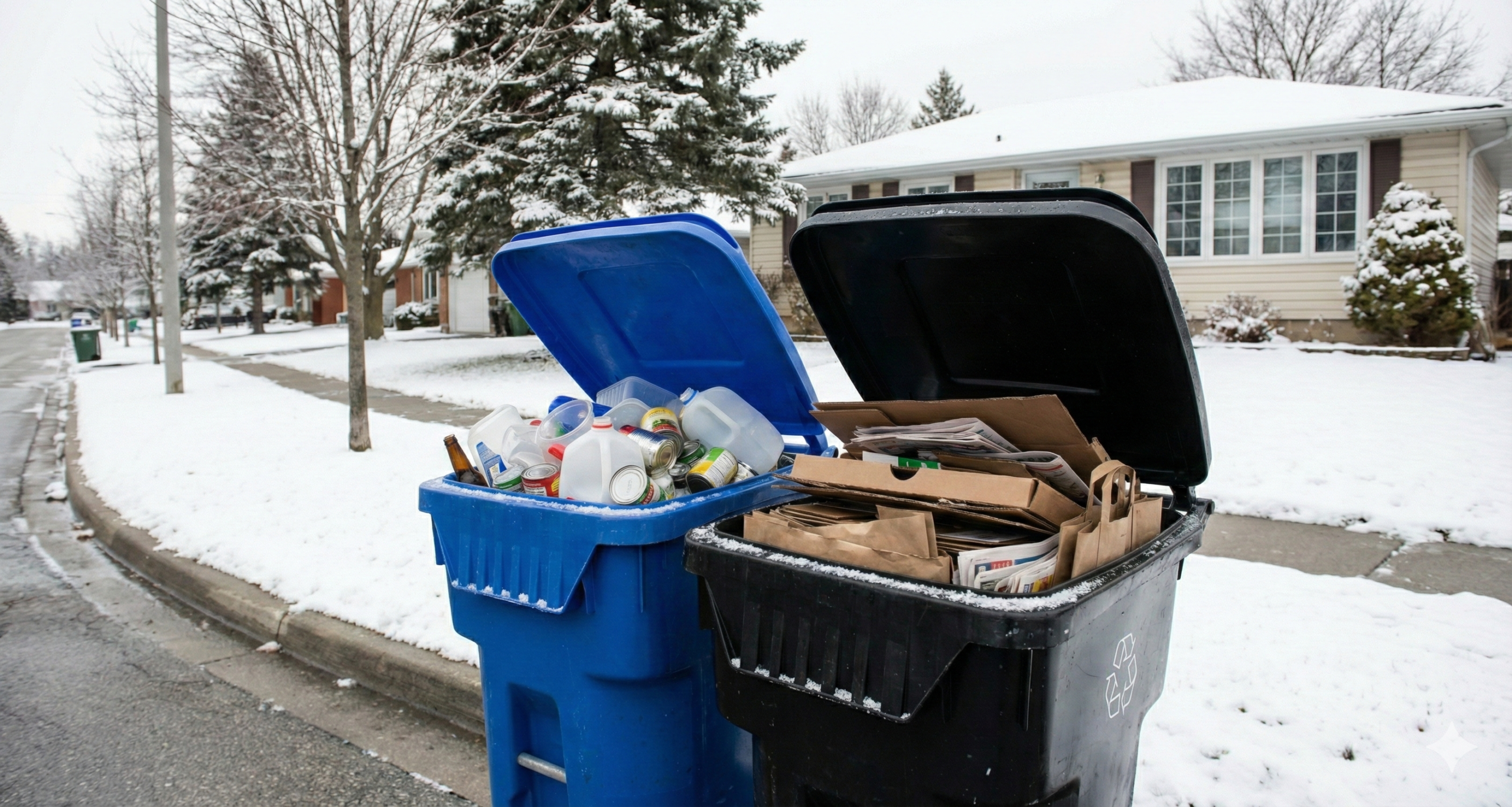
Coffee cups, grocery bags, and toothpaste tubes can finally go in your blue and black bins as Miller Waste takes over collection
OTTAWA — Starting New Year’s Day, Ottawa residents will notice a significant change in who picks up their recycling bins, even as the familiar blue and black containers remain on their curbs.
Who’s Taking Over and Why?
Miller Waste Services will assume responsibility for collecting recyclables from Ottawa households on January 1, replacing city workers who have handled the task for decades. The contractor is working under Circular Materials, a national non-profit organization that will administer the program.
The shift stems from provincial regulations requiring producers of paper and packaging—not municipalities—to fund and manage recycling programs. Ontario’s transition period, which began July 1, 2023, ends December 31, allowing municipalities like Ottawa to operate their own services while receiving producer funding. Come 2026, producers take full control.
“Responsibility for managing the recycling program now falls to producers, as required by provincial regulations,” said Andrea Gay Farley, Ottawa’s Program Manager for Waste Collections, Programs and Customer Service.
The change affects 383 Ontario municipalities and 12 First Nations, according to Allen Langdon, CEO of Circular Materials. The organization was founded by major Canadian food, beverage and consumer products companies, restaurants and retailers.
What’s Changing in Your Bins?
Residents will continue using their current blue and black bins, but the list of acceptable materials is expanding. Starting January 1, Ottawa residents can now recycle items previously destined for landfills: hot and cold beverage cups, plastic bags, toothpaste tubes, deodorant tubes, ice cream tubs, black plastic containers and frozen juice containers.
The province has standardized what goes into recycling bins across Ontario, eliminating the community-by-community variations that previously existed. Paper products, cardboard, various plastics, metal containers, glass jars and bottles all remain on the accepted list, though alcohol containers are excluded.
Residents needing new or replacement bins can obtain them free through Miller Waste Services by emailing [email protected] or calling 1-888-852-2374—the same contacts to use for service questions.
When and How Will Collection Work?
Collection day remains unchanged, but the time pickups occur may shift. Residents must still place bins curbside by 7 a.m. on their designated collection day, but Miller Waste Services operates on its own schedule, meaning trucks could arrive at different times than city crews did.
Garbage and green bin organics collection stays under city control, Farley noted. Only the blue and black bin recyclables transfer to private hands.
Where Do Concerns Remain?
Capital Ward Councillor Shawn Menard, who chairs the city’s environment and climate change committee, said public response has been “positive with respect to the expansion of items that will be allowed in the program and that the recycling will be collected on the same day as the green bin and garbage.”
However, confusion persists. “There is concern about who to contact if there are collection issues or where to get new bins,” Menard said. The city is addressing this by programming automatic call forwarding through its 3-1-1 service to Miller Waste and posting information on Ottawa.ca.
For multi-residential buildings, the picture is more complicated. Buildings already served by city recycling join the new system January 1. But buildings using private recycling cannot transition until 2031, and new multi-unit buildings with more than six units must also arrange private collection until that year. The city continues handling garbage, organics and bulky items for these properties but requires proof of private recycling service.
Regional Impact
The changes extend beyond Ottawa. Residents in other Ontario communities can check Circular Materials‘ online directory to see if their municipality is participating, or visit their local government website for recycling details.
Why This Matters for the Future
Menard expressed optimism that accepting more recyclable items will divert waste from landfills. “The council-approved Solid Waste Master Plan is built on diverting and recycling as much as possible,” he wrote in an email.
The broader goal extends beyond collection logistics. Individual Producer Responsibility Programs aim to pressure manufacturers into reducing packaging waste by making them financially accountable for end-of-life disposal.
“I believe that in time we will notice a marked decrease in packaging and shifts towards materials that can be recycled at a higher value,” Menard said.
For Ottawa residents, the immediate reality is simpler: same bins, different truck, more recyclables accepted. The blue and black boxes that line neighborhood streets each week will look familiar, even as the system behind them transforms completely.