
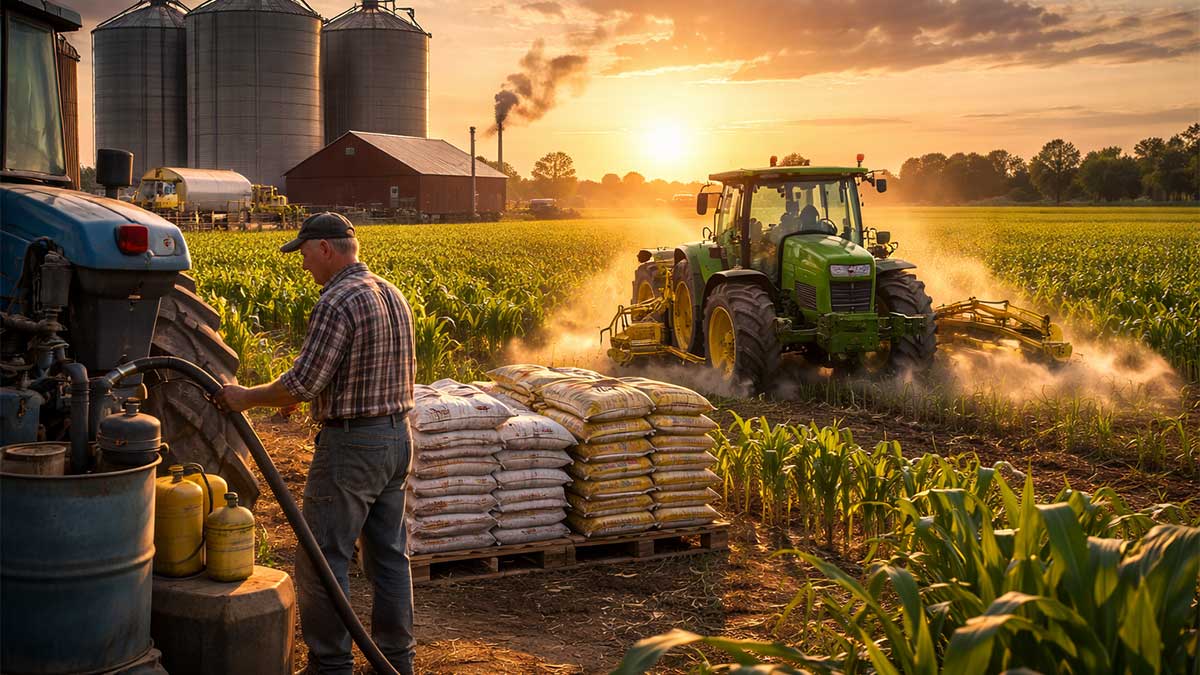
Rising geopolitical tensions in the Middle East are beginning to affect everyday life in Canada, particularly in the agricultural sector. As the war involving Iran continues, farmers in eastern Ontario are facing higher operating costs driven by increased fuel prices and uncertainty around fertilizer supplies. These pressures are emerging at a critical moment, just as producers prepare for the spring planting season.
Diesel Prices Surge, Increasing Farm Expenses
Fuel costs have climbed sharply in recent days, with diesel prices in Ottawa reaching approximately $2.37 per litre. For farmers like Mel Foster, who operates the Foster Family Farm in North Gower, the increase is already having a noticeable impact.
Diesel remains the backbone of modern agriculture and transportation. From tractors and planting equipment to the trucks that move goods across North America, nearly every stage of food production and distribution depends on it. As fuel costs rise, farmers face immediate increases in operational expenses that are difficult to avoid.
Farming Operations Under Pressure
Agricultural work relies heavily on machinery, and higher fuel prices directly affect day-to-day activities. Equipment such as transplanters, irrigation systems, and tractors require consistent fuel use, especially during planting season.
Foster explains that without mechanized tools, farming becomes significantly more labour-intensive. However, rising labour costs make manual work an expensive alternative. This creates a difficult balance for farmers who must maintain productivity while managing escalating expenses.
Strait of Hormuz Disruptions Impact Global Supply
A key factor behind rising costs is the disruption in the Strait of Hormuz. This narrow shipping corridor is responsible for transporting roughly 20 percent of the world’s oil and nearly one-third of global fertilizer supplies.
With Iran limiting movement through this route, global markets are experiencing increased volatility. The result is higher prices for both fuel and agricultural inputs, which are quickly felt at the farm level.
Fertilizer Supply Concerns Grow
Beyond fuel, fertilizer availability is becoming a major concern. Fertilizers are essential for maintaining soil health and ensuring strong crop yields. Any disruption in supply can have long-term consequences for food production.
While some farmers, including Foster, have secured fertilizer at fixed prices for the current season, future costs remain uncertain. If the conflict continues or supply chains remain disrupted, prices could rise further next year.
Farmers may be forced to reduce fertilizer usage due to higher costs, which could negatively affect crop output. However, experts warn that consistently cutting back on fertilizer is not sustainable, as it can degrade soil quality over time.
Economic Impact on Farmers and Consumers
According to Mike von Massow from the Ontario Agricultural College, farmers are among the first to feel the financial strain of rising input costs. The key question is whether these increased expenses can be passed on to consumers.
If farmers absorb the costs, their profit margins shrink significantly. If they pass them along, food prices for consumers will rise. Either outcome highlights the broader economic ripple effect of global conflicts on local communities.
Long-Term Effects of Global Instability
Economists suggest that the financial impact of the Iran conflict may extend beyond its immediate duration. Even after hostilities end, supply chains may take time to stabilize, and prices may remain elevated.
For the agricultural sector, this means continued uncertainty. Planning future seasons becomes more difficult when key inputs like fuel and fertilizer are subject to unpredictable price swings.
Conclusion
The ongoing conflict in Iran is demonstrating how global events can quickly influence local economies. For farmers in eastern Ontario, rising diesel prices and concerns over fertilizer supply are creating significant challenges at a crucial time of year. As production costs climb, the effects are likely to be felt throughout the food supply chain, ultimately impacting consumers as well. While farmers continue to adapt, the situation underscores the vulnerability of agriculture to international disruptions and the importance of stable supply systems.
FAQs
1. Why are diesel prices increasing for farmers?
The Iran conflict has disrupted global oil supply routes, particularly through the Strait of Hormuz, leading to higher fuel prices.
2. How does fertilizer supply affect farming?
Fertilizer provides essential nutrients for crops. Limited supply or higher costs can reduce crop yields and affect food production.
3. Will food prices increase because of this?
There is a strong possibility, as farmers may need to pass higher production costs on to consumers.
4. Are these price increases temporary?
While they may stabilize after the conflict ends, economists warn that impacts could last longer due to supply chain disruptions.
5. How are farmers coping with rising costs?
Some are locking in prices where possible, while others are adjusting operations, though options remain limited.