
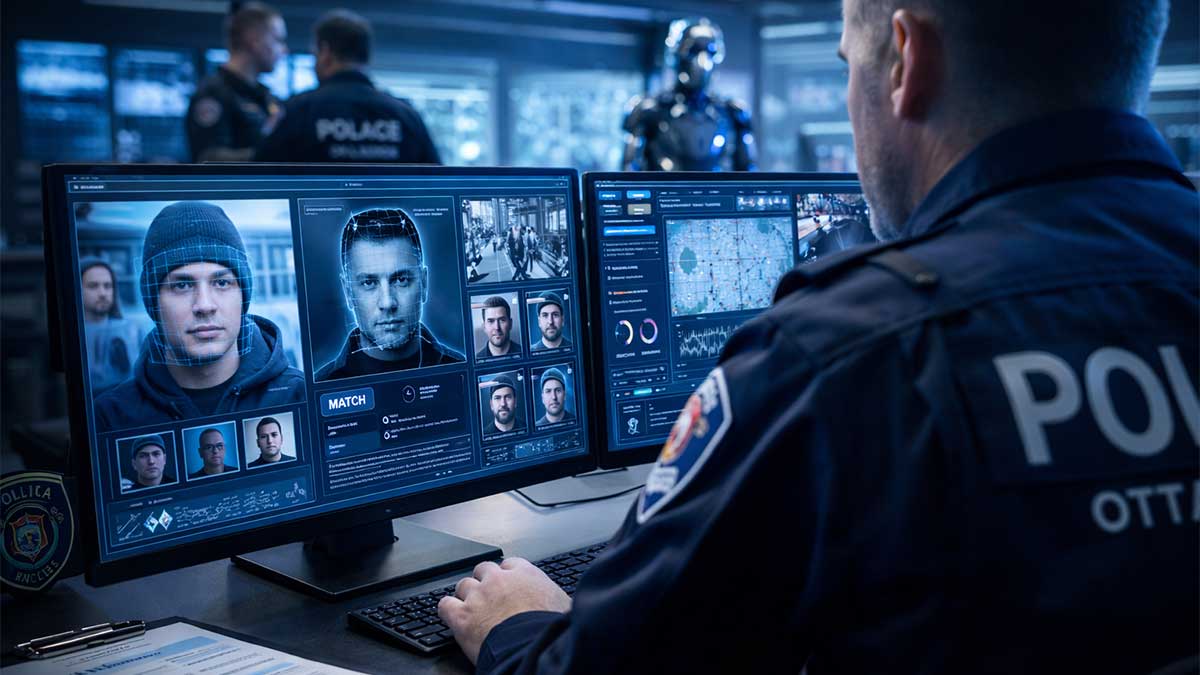
The Ottawa Police Service is preparing to integrate artificial intelligence into its operations, marking a significant step toward modernizing policing in Canada’s capital. Officials say the new technology will assist with investigations and administrative tasks, but emphasize that its use will be carefully regulated to address concerns about privacy, bias, and public trust.
Why Ottawa Police Are Turning to AI
Police leaders believe artificial intelligence can enhance efficiency and improve how cases are handled. Chief Eric Stubbs explained that law enforcement agencies across the country are still determining how best to adopt AI, describing it as a rapidly evolving field.
According to Stubbs, when used responsibly, AI has the potential to strengthen community safety and streamline service delivery. However, he stressed that any adoption must be accompanied by strict oversight and accountability measures.
Key Applications of AI in Policing
The Ottawa Police Service plans to use AI in several areas, including:
- Facial recognition technology to assist investigators in identifying potential suspects
- Automated transcription tools to convert incident reports and interviews into written records
- Data analysis systems to help detect patterns and generate investigative leads
These tools are expected to support officers in solving cases more efficiently, particularly for crimes such as shoplifting, fraud, and property offences.
Facial Recognition and Investigative Use
One of the most discussed aspects of the plan is the use of facial recognition software. Deputy Chief Trish Ferguson stated that the technology would be used to analyze images and video footage obtained legally during investigations.
The system would compare these visuals with existing police databases, including mugshots, to generate possible leads. Officials emphasize that this process is intended to assist investigators rather than replace human decision-making.
Policy Framework and Legal Safeguards
To address public concerns, the Ottawa Police Service is developing a comprehensive AI policy, expected to be finalized by late April. The framework will include:
- Compliance with the Canadian Charter of Rights and Freedoms
- Adherence to human rights obligations
- Strict privacy protections and impact assessments
- Clear governance structures and accountability mechanisms
These measures aim to ensure that AI tools are used within the boundaries of Canadian law and ethical standards.
Balancing Innovation with Public Trust
City officials and oversight bodies have emphasized that technological advancement must not come at the expense of civil liberties. Marty Carr, vice-chair of the Ottawa Police Services Board, highlighted the importance of protecting privacy, equality, and due process.
She noted that human rights considerations must define how AI is used, rather than allowing technology to dictate policing practices. Ensuring transparency and accountability will be critical to maintaining public confidence.
Addressing Concerns Around Bias and Privacy
The introduction of AI in policing has raised legitimate concerns about algorithmic bias and potential misuse of data. Police officials acknowledge these risks and say they are central to the policy development process.
By incorporating privacy assessments and oversight mechanisms, the Ottawa Police Service aims to mitigate these challenges and ensure that AI tools do not disproportionately impact certain communities.
Timeline for Implementation
The proposed AI policy is expected to be formally introduced in late April, following consultations and internal review. Once approved, the Ottawa Police Service will begin gradually integrating AI tools into its operations.
Officials have indicated that the rollout will be carefully monitored to evaluate effectiveness and ensure compliance with established guidelines.
Conclusion
The Ottawa Police Service’s move toward adopting artificial intelligence reflects a broader shift in modern policing. While the technology offers clear benefits in terms of efficiency and investigative support, it also raises important questions about privacy, fairness, and accountability. By developing a structured policy grounded in legal and ethical principles, Ottawa police aim to strike a balance between innovation and public trust. The success of this initiative will depend on how effectively these safeguards are implemented in practice.
FAQs
1. What AI tools will Ottawa police use?
They plan to use facial recognition, transcription software, and data analysis tools to support investigations.
2. When will the AI policy be introduced?
The policy is expected to be finalized and introduced in late April 2026.
3. How will privacy be protected?
The policy includes privacy impact assessments and must comply with Canadian law and human rights standards.
4. Will AI replace police officers?
No, AI will assist officers by providing leads and improving efficiency, but human oversight remains essential.
5. Why is facial recognition controversial?
It raises concerns about privacy, accuracy, and potential bias, which is why strict controls are being developed.