
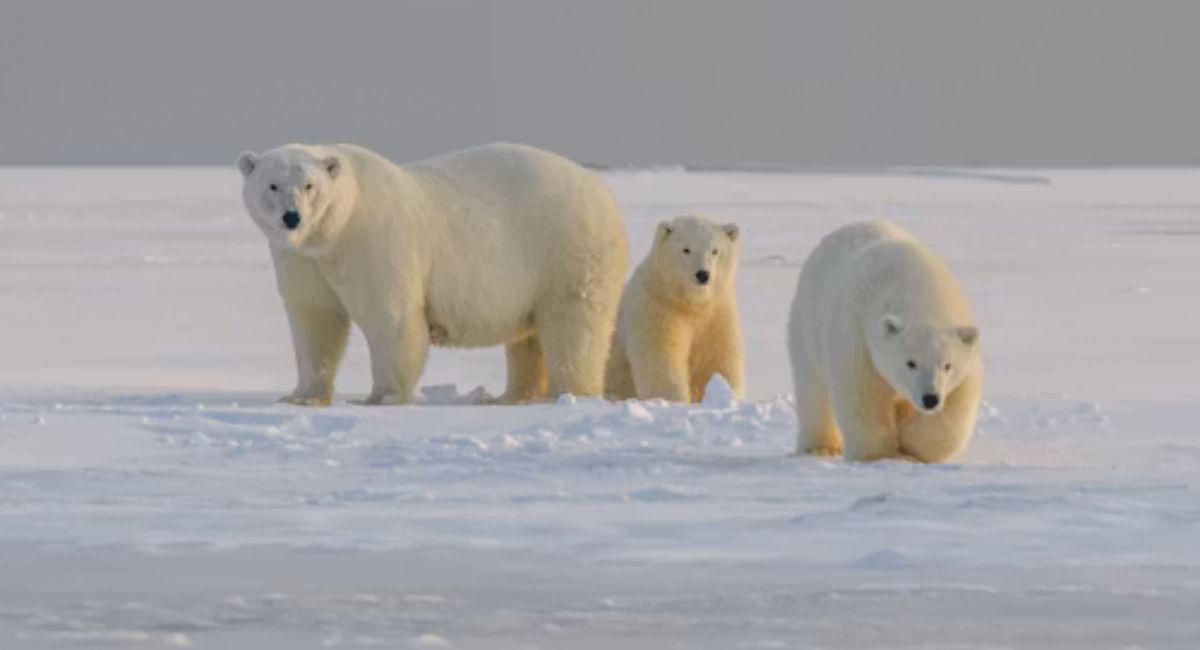
A remarkable polar bear and seal pup encounter recorded in Svalbard initially appeared to show an unexpected act of mercy. After pulling a young seal onto the ice, the polar bear moved backwards instead of immediately feeding. However, wildlife observers believe the behaviour had a much more calculated purpose.
The encounter was filmed in Billefjorden during spring 2026 using telephoto lenses. According to observers, the polar bear had been hunting for several hours before targeting a juvenile bearded seal. After bringing the pup onto the ice, it apparently tried to use the vulnerable animal to attract the mother seal from the water.
Rather than demonstrating compassion, the polar bear and seal pup interaction offered a rare look at how an experienced Arctic predator may adjust its hunting strategy according to the behaviour of its prey.
Read this also: Moscow Mounts Strong Defence as Nearly 400 Ukrainian Drones Launch Massive Attack
Polar Bear and Seal Pup Encounter Unfolds in Svalbard
Wildlife watchers aboard a small expedition in Billefjorden saw the polar bear carefully examine the surrounding ice before approaching the juvenile seal. The footage showed the animal stalking and striking the pup before pulling it onto the frozen surface.
What happened next made the observation especially unusual. Instead of remaining beside the pup, the bear began moving away while apparently continuing to monitor the nearby water.
The mother bearded seal was believed to be swimming close to the ice. Observers interpreted the bear’s retreat as an attempt to encourage her to approach the pup, potentially allowing the predator to capture both animals.
The strategy did not succeed. The mother remained in the water and did not attempt to reach the juvenile. Once it became clear that she would not approach, the bear returned, struck the pup with its forepaws and dragged it across the ice before feeding.
The outcome means the scene should not be described as a rescue. Although the bear temporarily backed away, its behaviour remained part of a hunting sequence.
Why Did the Polar Bear Back Away?
The most likely explanation is that the predator was attempting to use the seal pup as bait. Female bearded seals depend on sea ice for giving birth and nursing, while mothers and pups may remain together on or around ice floes during this sensitive period.
The polar bear may have learned that a mother could remain nearby when her pup was threatened. By creating distance, the bear may have been trying to make the ice appear temporarily safer.
Michele D’Agostino, co-founder of the expedition company that documented the scene, said the bear spent considerable time examining the ice and appeared to use the pup deliberately in an effort to draw out the mother. He interpreted the behaviour as something developed through experience rather than a purely automatic response.
Scientists were not reported as conducting a formal behavioural analysis of this specific polar bear and seal pup event. Therefore, claims about the animal’s exact thoughts or intentions should be treated cautiously.
Observers can describe the sequence and suggest a likely explanation, but they cannot know precisely what the bear was thinking. The interpretation remains plausible because the bear moved away, watched the area and returned when the mother did not approach.
Rare Behaviour Reveals an Adaptable Arctic Hunter
Polar bears use several techniques to capture seals. A bear may wait beside a breathing hole, stalk an animal resting on the ice or search for seal pups concealed inside snowy birth lairs.
Waiting near breathing holes can be particularly efficient. Seals must eventually surface for air, allowing a patient bear to remain relatively still instead of wasting valuable energy on a long pursuit. One adult or subadult seal can provide enough energy to sustain a polar bear for several days.
The Svalbard polar bear and seal pup encounter appears to show another possible strategy: manipulating the situation to create an opportunity for a larger catch.
That does not necessarily mean the bear planned several steps in the same way a human would. Animal behaviour can develop through instinct, trial and error, observation and previous hunting success.
Polar bears are opportunistic predators that must respond to shifting ice, weather, prey movement and competition. A strategy that works once may be repeated, while an unsuccessful approach may be abandoned.
The bear in the footage also appeared patient. It did not immediately consume the first available prey, suggesting that it may have judged the possibility of obtaining the adult seal to be worth briefly delaying its meal.
Sea Ice Shapes the Polar Bear and Seal Pup Relationship
Sea ice is essential to both polar bears and Arctic seals. Polar bears use it as a platform for travelling and hunting, while bearded and ringed seals rely on it for resting, reproducing, nursing and escaping marine threats.
This shared habitat creates an intense predator-prey relationship. The same ice that gives seals a place to raise their young also gives polar bears access to one of their most important food sources.
Spring is an especially important feeding season for polar bears because seals spend more time on or near the surface while giving birth and nursing. Young seals may also be less experienced at recognising and escaping predators.
Snow and ice conditions can influence which animal has the advantage. Thick snow over a ringed seal’s birth lair may slow a bear and give the pup time to escape. Too little snow, however, can leave young seals exposed on the surface.
Changing sea-ice conditions are affecting these interactions. Reduced access to stable sea ice can limit the time polar bears have to hunt energy-rich seals, while changes in ice quality can also affect the places seals use for pupping and nursing.
The polar bear and seal pup footage therefore captures more than a dramatic hunt. It shows how closely the survival strategies of Arctic predators and prey are connected to frozen marine habitat.
Why the Scene Should Not Be Romanticised
People often interpret animal behaviour through human emotions. A large predator moving away from a helpless pup can easily appear compassionate, especially when viewed as a short video without the full hunting sequence.
The complete footage presents a different story. The bear did not release the pup or help it escape. It returned after the mother remained underwater and killed the juvenile.
Calling the behaviour cruel would also impose a human moral judgement on a wild predator. Polar bears depend heavily on fat-rich marine mammals and must secure enough energy during productive hunting periods to survive seasons when food is limited.
The polar bear and seal pup encounter was neither a rescue nor an act of unnecessary violence. It was a natural hunting event in which one animal attempted to obtain food while another tried to avoid danger.
The extraordinary part was the bear’s apparent willingness to delay feeding and reposition itself in an attempt to attract a second animal. Such complete hunting sequences are rarely witnessed because they may unfold over several hours in remote and difficult Arctic conditions.
The images were taken from a distance with telephoto equipment, which can make wildlife appear closer to the camera than it actually was. The expedition stated that the observation followed local regulations and wildlife-viewing distance guidelines.