
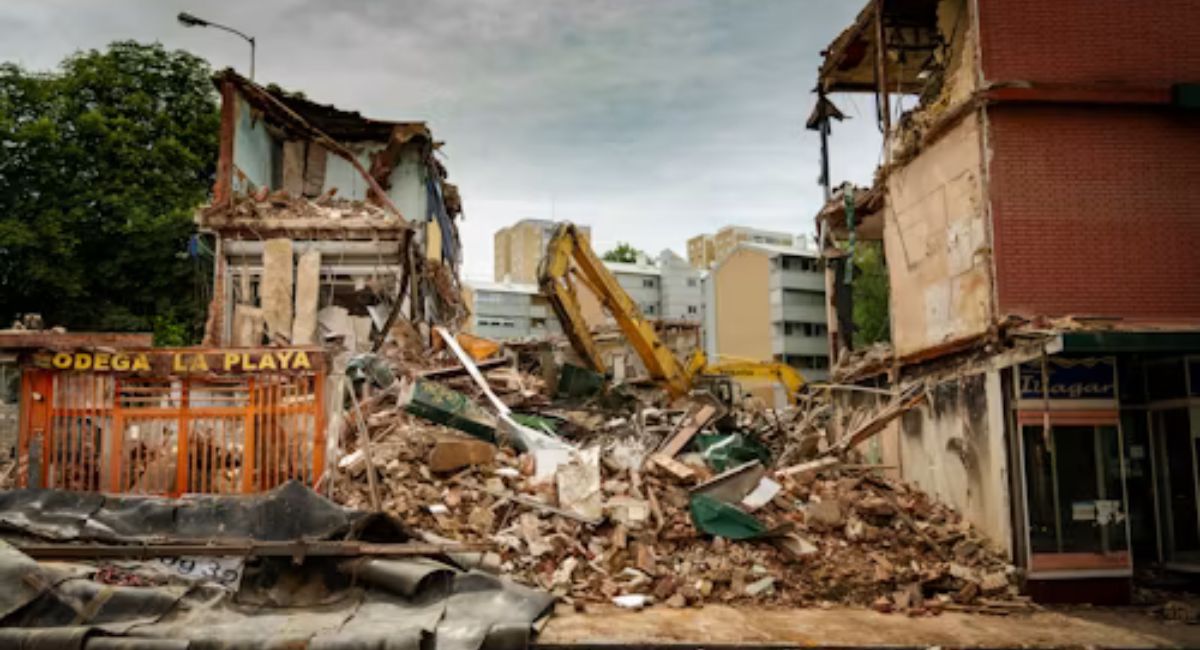
A powerful southern Japan earthquake struck Kumamoto Prefecture on the island of Kyushu on July 28, 2026, damaging buildings, disrupting transport and leaving people trapped inside a partially collapsed shopping centre. Emergency crews rushed to the worst-affected locations as authorities warned residents about aftershocks, unstable structures and possible landslides.
The Japan Meteorological Agency initially measured the earthquake at magnitude 7.1, with a shallow depth of approximately 10 kilometres. A later moment-magnitude calculation placed the event at 6.8, explaining why both figures have appeared in news reports. The strongest shaking reached level 7, the highest reading on Japan’s seismic-intensity scale, in parts of Kumamoto.
Southern Japan Earthquake Triggers Major Rescue Operation
The southern Japan earthquake struck at approximately 4:27 p.m. local time, when shops, roads and public spaces were still busy. One of the most serious incidents occurred at the Aeon Mall in Kashima Town, where part of the building collapsed after the shaking and a subsequent explosion.
Initial reports indicated that approximately 20 to 30 mall employees could not be contacted. Several people were pulled from the damaged structure and taken to hospital, while firefighters and specialist rescue teams continued searching unstable sections of the building.
Rescue operations were complicated by extensive debris and the continuing threat of aftershocks. Emergency personnel had to balance the urgent need to reach trapped victims with the risk that weakened floors, walls and ceilings could collapse again.
Authorities had not immediately confirmed a final casualty total. Reports that several people may have died remained subject to official verification as rescuers searched the mall and emergency services collected information from other damaged communities.
Hundreds of military personnel were deployed to support emergency operations, while aircraft were sent to assess damage across the affected region. The government also instructed officials to provide timely information and prioritise the protection and rescue of residents.
Also Read About: France and Spain Face Alarming Heatwave as Wildfire Crisis Intensifies
Damaged Shopping Mall Becomes Rescue Priority
The damaged shopping centre quickly became the main focus of the southern Japan earthquake response. Emergency workers established safety zones around the building and began identifying areas where survivors could be located.
One side of the mall was severely damaged, exposing parts of its steel structure and scattering debris across the surrounding parking area. Fire engines and ambulances gathered outside as rescue teams searched the building for survivors.
Witnesses reported smoke and a powerful explosion after the earthquake. However, the mall operator said the exact cause of the blast was not immediately known. Authorities were investigating whether damaged gas infrastructure may have been involved, but no official conclusion had been announced.
Shopping centres can be particularly difficult rescue environments because they contain large open areas, glass, suspended ceilings, electrical equipment and complicated internal layouts. Structural damage may also block corridors and emergency exits, making it harder for survivors and rescuers to move safely.
Hospitals in Yatsushiro and Kumamoto treated dozens of injured people following the earthquake. Reports indicated that some patients were in serious condition, while injuries elsewhere were connected to falling objects, collapsed structures and transport disruption.
Tsunami Advisory Lifted as Aftershock Threat Continues
A tsunami advisory was issued for the Ariake and Yatsushiro seas following the southern Japan earthquake. The advisory covered coastal areas of Kumamoto and neighbouring prefectures but was lifted within approximately two hours.
Although the immediate tsunami threat eased, authorities continued advising residents to follow official instructions. Earthquakes can damage ports, seawalls, roads and buildings in ways that are not immediately visible.
The greater continuing concern was the possibility of strong aftershocks. The Japan Meteorological Agency recorded further seismic activity after the main earthquake and warned that residents in the hardest-hit areas should remain alert for additional powerful shaking.
Approximately 100 smaller aftershocks had already been detected following the main event, according to information reported by Reuters. Officials also warned that damaged slopes could become vulnerable to landslides, particularly if rain affected the region.
Aftershocks can occur minutes, hours or days after a major earthquake. They may bring down debris, worsen cracks in buildings and trigger new structural failures. People whose homes suffered visible damage were therefore advised to move to safer locations rather than re-entering before inspections were completed.
The southern Japan earthquake struck an area that still remembers the destructive Kumamoto earthquakes of 2016. That history has intensified public concern and reinforced the need for rapid evacuations, building inspections and reliable emergency communication.
Transport, Power and Communications Face Disruption
The earthquake caused serious disruption to transport across parts of Kyushu. Shinkansen bullet trains and local railway services were suspended while operators inspected tracks, bridges and stations for damage.
A train reportedly derailed and fell onto its side at Yatsushiro station. The runway at Aso Kumamoto Airport was also closed, resulting in flight cancellations and diversions.
Damaged roads and bridges created additional travel difficulties. Large cracks appeared on some roads, while emergency inspections slowed traffic and complicated the movement of rescue vehicles, equipment and supplies.
Power cuts affected approximately 48,000 households following the southern Japan earthquake. Some mobile phone services were also disrupted by power shortages and transmission-line failures, making it more difficult for residents to contact relatives or receive updates.
Fires and partial building collapses were reported in several locations. Authorities advised residents to be cautious around damaged electrical equipment, gas connections and open flames.
Japan’s Nuclear Regulation Authority reported no abnormalities at three nearby nuclear power plants. Monitoring continued as officials examined critical infrastructure throughout the affected region.
Japan’s Earthquake Preparedness Faces a Severe Test
Japan has strict construction standards, regular earthquake drills and an advanced early-warning system. However, a shallow and powerful earthquake can still cause severe localised destruction, especially when its epicentre is close to populated communities.
The southern Japan earthquake demonstrated how quickly one disaster can affect several essential systems. Search-and-rescue teams must respond to collapsed buildings while hospitals treat injured people, utility crews restore electricity and transport authorities inspect damaged networks.
Public behaviour is also important during the emergency. Residents should stay away from unstable buildings, follow evacuation orders and avoid sharing unverified reports about victims or damage. Roads and emergency routes should remain clear for ambulances, fire engines and rescue equipment.
People outside the affected region should rely on updates from the Japan Meteorological Agency, government agencies, police and established news organisations. Casualty figures and damage assessments may change as emergency workers reach isolated communities and gain access to collapsed buildings.
The immediate priority remains finding people trapped in the shopping mall and other damaged structures. The full impact of the southern Japan earthquake will become clearer as rescue work continues and engineers assess homes, roads, bridges and public facilities.