
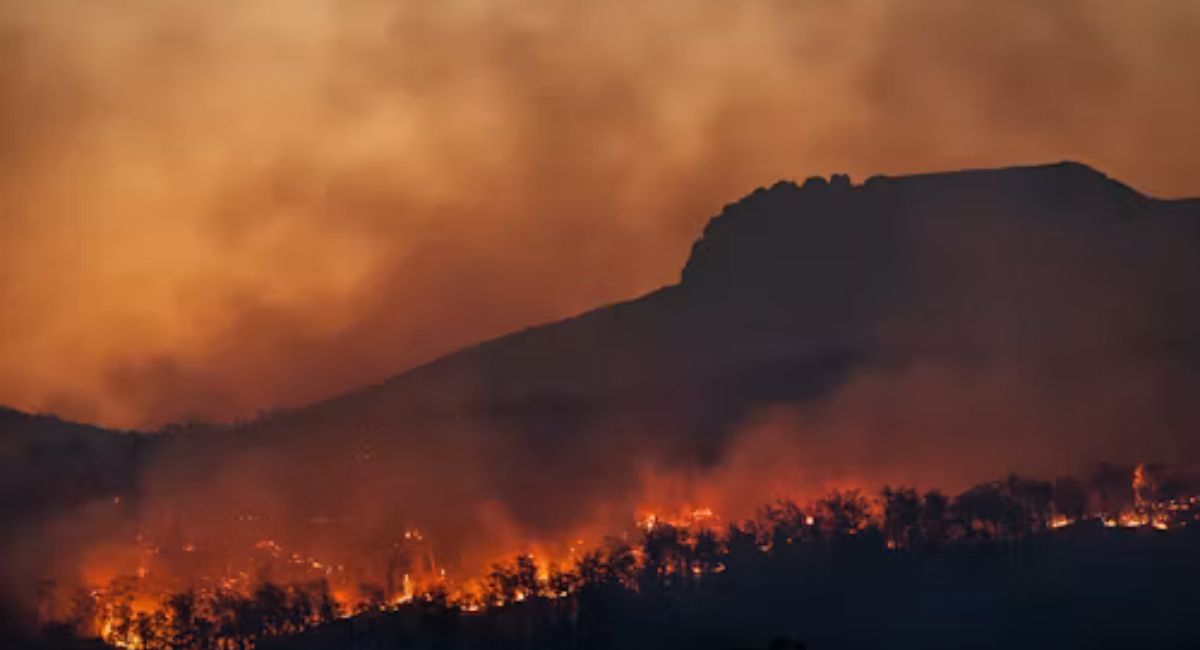
France and Spain are preparing for another period of dangerous heat as firefighters continue working to control wildfires across both countries. As of July 28, 2026, the France and Spain heatwave is expected to bring sharply rising temperatures, dry air and difficult wind conditions, increasing the risk that contained fire lines could break or new blazes could ignite.
Evacuations, damaged homes, transport restrictions and pressure on firefighting resources have already caused widespread disruption. Although cooler conditions briefly helped crews make progress in some affected areas, officials have warned that the France and Spain heatwave could make the situation unstable again as temperatures rise.
France and Spain Heatwave Raises the Risk of Fresh Fire Outbreaks
Heatwaves can worsen wildfire conditions by drying vegetation, reducing moisture in the soil and making forests and grasslands more combustible. During prolonged hot weather, even a spark from machinery, electricity infrastructure, discarded smoking materials or other human activity can develop into a fast-moving fire.
The latest France and Spain heatwave is particularly concerning because many affected areas have already experienced weeks of unusually hot and dry weather. Smouldering ground, damaged trees and dry vegetation can remain dangerous even after flames appear to have been brought under control.
Forecasts indicate that temperatures could climb into the upper 30s Celsius across parts of France, including the Paris region, while sections of Spain may again experience temperatures above 40°C. The France and Spain heatwave could reduce the time available for emergency crews to contain new outbreaks and make aerial firefighting more difficult.
Read this also: Rescheduled White House Press Dinner Sees Trump Deliver Fiery Address
Firefighters Make Progress but Conditions Remain Unstable
Firefighters in southwestern France and several Spanish regions have reported progress in slowing major blazes, allowing some residents to return to their communities. However, authorities have stressed that stabilised fires are not necessarily extinguished. Hidden embers can survive underground or inside damaged woodland before returning to the surface during hot, windy weather.
Near Bordeaux, emergency crews have continued monitoring extensive burned areas and protecting settlements, campsites and transport routes. In Spain, teams have worked across several provinces where fires have threatened rural communities, farmland and tourist areas.
The scale of the emergency has required thousands of firefighters, aircraft, helicopters, military units and civil-protection personnel. The European Union has also activated cross-border assistance, sending aircraft and firefighting teams to support France and Spain.
EU officials said the fires had contributed to the displacement of more than 300,000 people across the two countries, making the emergency one of Europe’s largest recent wildfire evacuation operations.
Evacuations and Public Health Concerns Grow
The France and Spain heatwave presents risks beyond the immediate fire zones. Extreme heat can be dangerous for older adults, young children, outdoor workers and people with heart, lung or other underlying health conditions.
High night-time temperatures are especially concerning because they can prevent the body from recovering after prolonged daytime heat. People without air conditioning or access to cooler public spaces may face greater exposure.
Wildfire smoke adds another serious health challenge. Fine particles can travel far beyond the immediate fire area, reducing air quality in cities and communities that may not be directly threatened by flames.
Residents may experience eye irritation, coughing, breathing difficulties or worsening symptoms from asthma and other respiratory illnesses. Smoke can also reduce visibility on roads and create additional problems for emergency aircraft.
Authorities generally advise people in affected areas to follow evacuation instructions, limit strenuous outdoor activity, keep windows closed when smoke is heavy and check on vulnerable neighbours.
Tourists are also being urged to monitor local warnings because fire conditions, road closures and evacuation areas can change quickly. Travellers should rely on official local alerts rather than assuming that conditions are safe because flames are not visible nearby.
Power demand may increase as households and businesses rely more heavily on air conditioning. Water systems can also come under pressure as emergency services require large supplies while farms and communities experience dry conditions.
Why Extreme Heat Can Intensify Wildfires
Hot weather alone does not start every wildfire, but it can create an environment in which fires ignite more easily and spread more rapidly. Low humidity removes moisture from plants, while strong winds push flames across dry landscapes and carry burning material ahead of the main fire front.
Large fires can also create their own weather. Intense heat may produce powerful columns of smoke and rising air, sometimes forming fire-generated clouds.
These systems can create unpredictable winds and, in rare cases, lightning, making firefighting operations more dangerous and potentially spreading flames in unexpected directions. Fire-generated weather was observed during the current European wildfire emergency.
The France and Spain heatwave follows an exceptionally hot start to the European summer. Copernicus reported that June 2026 was the hottest June recorded in western Europe and that widespread dryness contributed to wildfire activity in the Iberian Peninsula and southern France.
Scientists say individual fires can have several possible causes, including accidents, negligence, deliberate ignition and natural events. However, the broader warming climate increases the likelihood of severe heat and dry conditions that allow fires to grow more intense.
Copernicus identifies Europe as the world’s fastest-warming continent, with temperatures rising more than twice as quickly as the global average. The number of days involving dangerous heat stress is also increasing across the region.
Emergency Response Focuses on Containment and Prevention
Authorities in both countries are concentrating on protecting lives, strengthening firebreaks and stopping flames from reaching populated areas. Crews are also patrolling previously burned zones to detect flare-ups before they develop into larger emergencies.
The European response includes firefighting aircraft, helicopters, ground teams and satellite-based mapping. The EU had already positioned additional firefighters in high-risk countries for the 2026 summer season, including France and Spain, allowing support to be deployed more rapidly when national resources became stretched.
Prevention measures remain important during the France and Spain heatwave. Local restrictions may include bans on open fires, limits on machinery that could create sparks, closures of forests and tighter controls on access to high-risk areas.
Longer-term measures include clearing excess vegetation, maintaining evacuation routes, improving early-warning systems and adapting buildings in fire-prone regions.
Emergency planners are also examining how public-health systems, energy networks and local governments can prepare for heatwaves and wildfires occurring at the same time.
For now, the immediate concern is whether firefighters can hold their containment lines as the France and Spain heatwave builds. Even where residents have been allowed to return, officials are likely to maintain close monitoring because a sudden change in wind or temperature could quickly worsen conditions.