
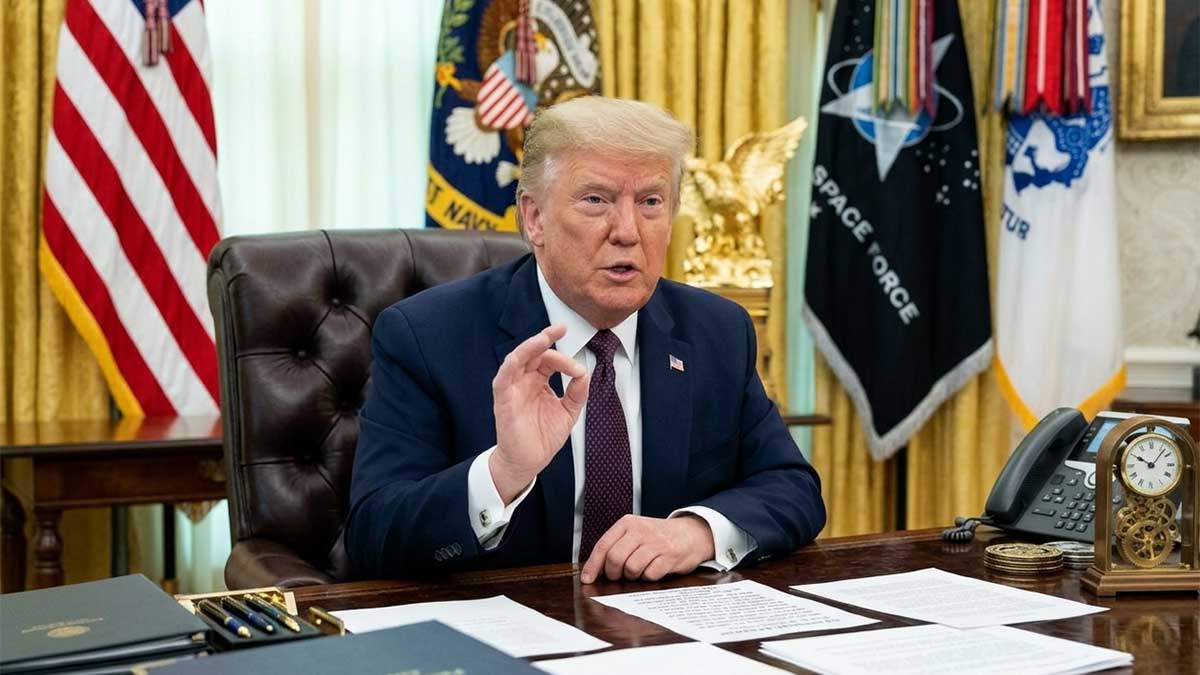
In a televised address from the White House, Donald Trump stated that the United States is close to accomplishing its main objectives in the ongoing conflict with Iran. Speaking as the war entered its fifth week, Trump emphasized military progress while also signaling the possibility of intensified strikes in the short term.
Military Progress and Final Phase of Operations
During the primetime speech, Trump described the campaign as highly effective, claiming that U.S. forces have significantly weakened Iran’s military capabilities. He said key components of Iran’s naval, drone, and ballistic missile systems had been heavily damaged.
The president indicated that the next phase of operations would involve more aggressive action over the coming two to three weeks. While he did not provide a firm timeline for ending the war, he suggested that remaining objectives could be completed quickly.
According to U.S. Central Command, American forces have carried out more than 12,300 strikes across Iran since the launch of Operation Epic Fury. Targets have included naval assets, missile launch sites, and defence production facilities.
Threat of Escalation if Diplomacy Fails
Trump left open the possibility of further escalation if negotiations with Iran do not succeed. He warned that critical infrastructure, particularly energy facilities, could be targeted.
He stated that the United States has so far avoided striking Iran’s oil sector, despite it being an easy target, because doing so would severely limit Iran’s ability to recover economically. However, he made it clear that this restraint could change if diplomatic efforts break down.
Earlier in the day, Trump claimed that Iran had requested a ceasefire, but Iranian officials rejected this assertion, calling it inaccurate.
Strait of Hormuz and Global Energy Tensions
A major focus of the address was the ongoing disruption in the Strait of Hormuz, which has been effectively blocked due to Iranian military activity. This has had a direct impact on global energy markets.
Trump urged countries that rely heavily on oil transported through the strait to take responsibility for securing the route. He called on allied nations to act with greater determination and protect their own energy interests rather than relying solely on U.S. intervention.
Despite these remarks, markets remained uneasy. The price of Brent crude oil rose from approximately $100 per barrel before the speech to around $105 afterward, reflecting continued concerns about supply disruptions.
Domestic Pressure and Political Context
The ongoing conflict is also affecting domestic politics in the United States. Rising fuel prices have added to economic pressures on households, while public support for the war appears to be declining.
Polling data indicates that a majority of Americans favour ending the conflict sooner rather than later, even if it means not achieving all stated objectives. Approval for the military action remains relatively low, with more respondents opposing the strikes than supporting them.
Trump’s personal approval ratings have also faced downward pressure as the war continues, adding further urgency to demonstrate progress.
Mixed Signals on Alliances and NATO
Although Trump did not directly address the future of NATO in his speech, his recent comments elsewhere have raised questions about the U.S. commitment to the alliance. He previously described NATO as ineffective, prompting concern among allies.
At the same time, NATO Secretary General Mark Rutte is expected to visit Washington, highlighting ongoing diplomatic engagement between the U.S. and its partners.
Political Reactions in the United States
The president’s speech drew sharp reactions from political figures across the spectrum. Senate Minority Leader Chuck Schumer criticized the address as lacking clarity and direction, arguing that it failed to outline a coherent strategy and risked alienating allies.
In contrast, Republican Senator Lindsey Graham expressed strong support, describing the speech as a decisive moment in the conflict. He suggested that Iran now faces a clear choice between negotiating a deal or facing further military action.
Ongoing Regional Conflict
Despite claims of progress, hostilities across the region continue. Iranian missile and drone attacks have targeted locations in the United Arab Emirates and Qatar, prompting defensive responses.
British forces have also reported intercepting multiple Iranian drones over countries including Jordan, Bahrain, and Cyprus, underscoring the widening scope of the conflict.
Conclusion
President Trump’s latest address presents a picture of a conflict approaching its final stage, with U.S. forces reportedly close to achieving their primary goals. However, ongoing military exchanges, rising global energy concerns, and declining domestic support highlight the complexity of the situation. While the administration signals confidence in a swift conclusion, the absence of a clear diplomatic roadmap and continued regional instability suggest that significant challenges remain before the conflict can truly come to an end.
FAQs
1. What did Trump say about the progress of the war?
He stated that the United States is close to completing its main military objectives in Iran.
2. Will the conflict end soon?
Trump suggested it could conclude quickly, but no specific timeline has been confirmed.
3. Why is the Strait of Hormuz important?
It is a critical global oil shipping route, and disruptions there affect energy prices worldwide.
4. How has the public responded to the war?
Polls show that many Americans want the conflict to end soon, with overall support for military action declining.
5. What happens if negotiations fail?
The U.S. may escalate attacks, including targeting Iran’s energy infrastructure.