
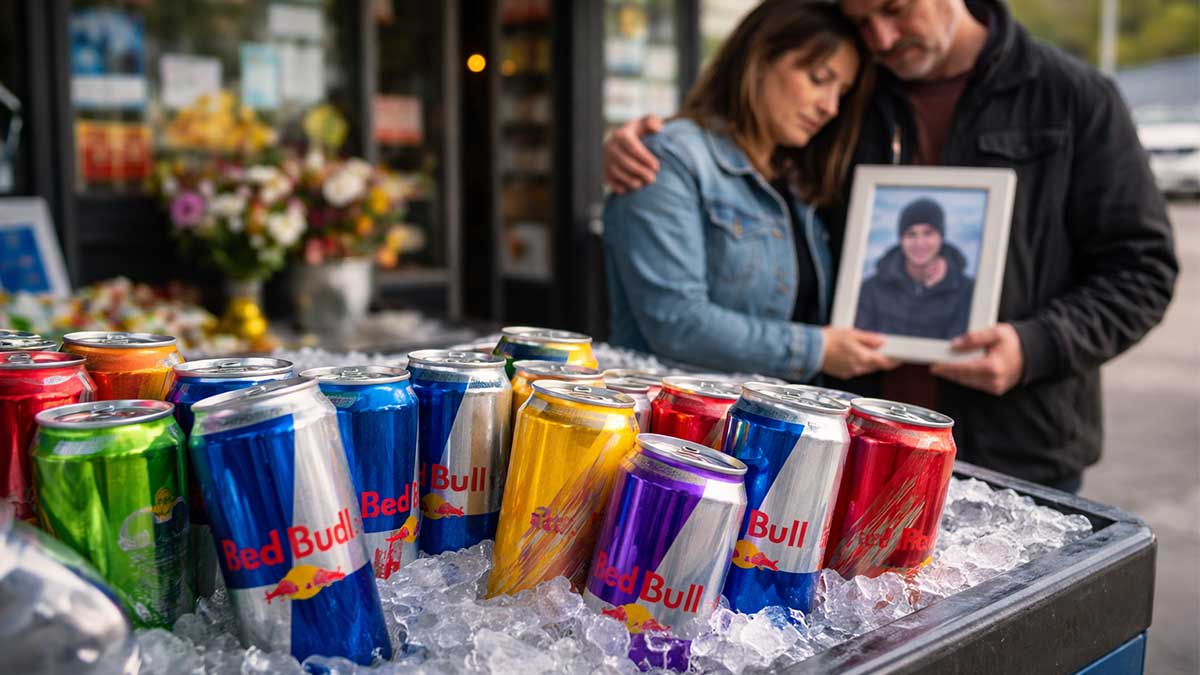
The tragic death of a 15-year-old Quebec teenager has intensified calls for stricter regulations on energy drink sales to minors. Following a meeting with provincial officials, the family of Zachary Miron is urging the government to act quickly, arguing that their son’s death highlights a growing public health concern that can no longer be ignored.
A Family Seeking Change After Loss
The parents of Zachary Miron met with Sonia Bélanger, Quebec’s Minister of Health and Social Services, and described the discussion as constructive. While they expressed appreciation for the dialogue, they emphasized that meaningful action must follow.
Veronica Martinez and David Miron, joined by Guillaume Cliche-Rivard, said their primary goal is to ensure that their son’s death leads to tangible change. They are advocating for restrictions on energy drink sales, particularly to minors, in order to prevent similar tragedies.
What Happened to Zachary Miron
Zachary died in the winter of 2024 while on a school ski trip in Morin-Heights, located in Quebec’s Laurentians region. According to his family, the combination of his prescribed ADHD medication and a can of Red Bull triggered a cardiac arrhythmia, resulting in his sudden death.
His parents stress that Zachary had no known health issues, making the incident even more alarming. They believe that greater awareness and regulation could have prevented the fatal outcome.
Growing Concerns About Energy Drink Consumption
The case has drawn attention to the widespread availability and marketing of energy drinks to young people. Zachary’s parents argue that these products are heavily promoted through appealing packaging, low prices, and easy access in a variety of retail settings, including convenience stores, pharmacies, and even hardware stores.
They warn that teenagers are particularly vulnerable due to both accessibility and lack of awareness about potential health risks. The family also expressed concern that medical professionals may not consistently warn young patients taking stimulant medications about the dangers of combining them with caffeinated energy drinks.
Petition and Public Support
In response to their son’s death, the family launched a petition calling for a ban on energy drink sales to minors. The petition has gained significant traction, collecting nearly 15,000 signatures on Quebec’s National Assembly website.
Public sentiment appears to support regulatory action. According to polling referenced by the family, approximately 77 percent of respondents favour some form of restriction on these products.
Government Response and Possible Policy Changes
Following the meeting, Minister Bélanger indicated that the government is considering concrete steps before the current parliamentary session ends on June 12. She confirmed that discussions are underway with key stakeholders, including pharmacists and public health officials such as Dr. Caroline Quach-Thanh.
The minister acknowledged that age-based restrictions are a central issue, with debates focusing on whether limits should apply to those under 16 or under 18. She stated that the government is seriously evaluating the possibility of implementing a full ban for minors.
Proposal for “Zachary Miron Act”
Supporters, including Cliche-Rivard, have suggested that the situation could lead to new legislation, potentially named in Zachary’s memory. The proposed law would aim to regulate or restrict energy drink sales to young people and increase awareness of associated health risks.
Advocates believe that such a measure could serve as a lasting legacy and help prevent similar incidents in the future.
A Broader Public Health Debate
The case has sparked wider discussions about the safety of energy drinks, especially when combined with medications such as those prescribed for ADHD. Health experts are increasingly examining the potential cardiovascular risks associated with high caffeine intake in adolescents.
The issue also raises questions about consumer awareness, product labelling, and the responsibility of retailers and healthcare providers in informing young consumers about potential dangers.
Conclusion
Zachary Miron’s death has become a catalyst for change in Quebec, bringing renewed attention to the risks associated with energy drink consumption among youth. While the government appears open to regulatory action, the coming weeks will be critical in determining whether meaningful policies are implemented. For Zachary’s family, the goal is clear: to ensure that no other family experiences a similar loss. Their advocacy highlights the urgent need for stronger safeguards and greater awareness around products that are widely available but not without risk.
FAQs
1. What caused Zachary Miron’s death?
He suffered a fatal arrhythmia after consuming an energy drink alongside ADHD medication.
2. What changes are his parents calling for?
They are advocating for a ban on energy drink sales to minors, or at least stricter age restrictions.
3. How much public support is there for regulation?
A poll cited by the family suggests that 77 percent of people support regulating energy drinks.
4. Is the Quebec government planning action?
Yes, officials are considering legislative and regulatory measures, including a possible ban for minors.
5. Why are energy drinks considered risky for teens?
They contain high levels of caffeine and stimulants, which can pose health risks, especially when combined with certain medications.