
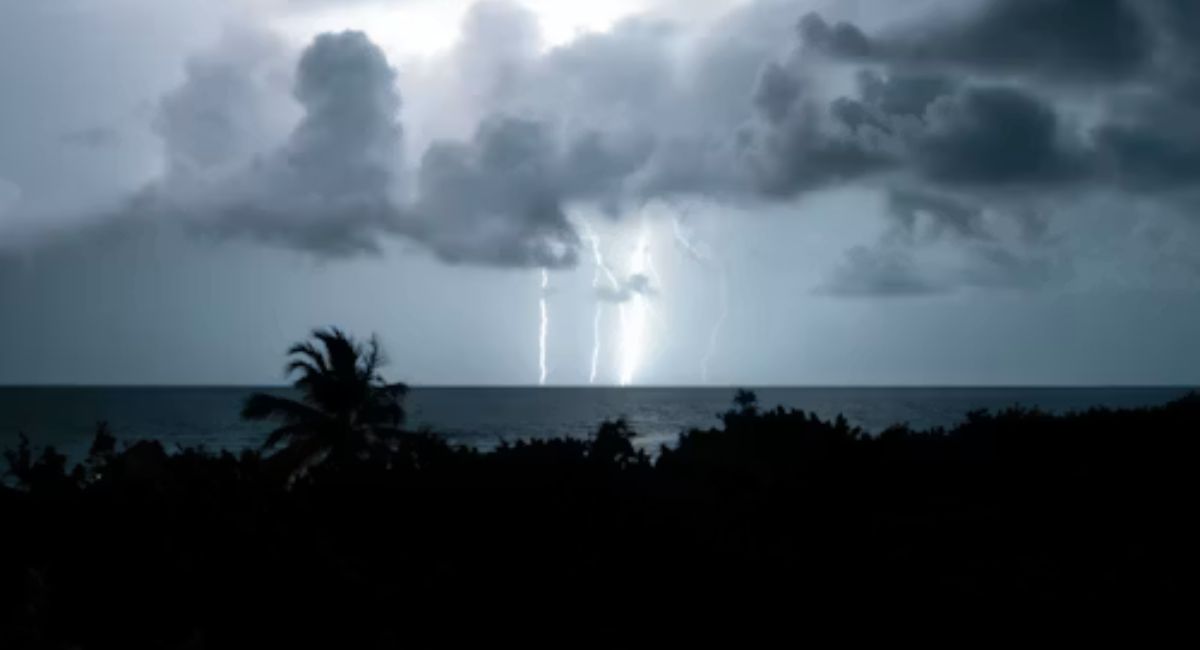
Tropical Storm Bertha is threatening parts of the U.S. Gulf Coast with heavy rainfall, flash flooding, strong winds and potentially dangerous storm surge. The system strengthened over the northern Gulf of Mexico after forming south of the Florida Panhandle, prompting watches and warnings across several coastal states.
As of early Tuesday, July 21, 2026, Bertha had maximum sustained winds of approximately 50 mph. The storm was located about 110 miles south-southwest of Panama City, Florida, and around 170 miles southeast of Mobile, Alabama. It was moving northwest at about 5 mph.
Forecasters warned that the slow and somewhat uncertain movement could expose communities from Florida to Louisiana—and potentially areas farther west—to prolonged periods of rain. Residents have been advised to follow official updates because relatively small changes in the storm’s track could significantly affect local flooding and coastal conditions.
Tropical Storm Bertha Strengthens in the Gulf
Tropical Storm Bertha became the second named storm of the 2026 Atlantic hurricane season after developing in the Gulf of Mexico on Monday evening.
The National Hurricane Center reported that Bertha had resumed a northwestward movement early Tuesday. Some slight strengthening remained possible before the system was expected to weaken gradually through the middle of the week.
Bertha’s relatively slow movement is one of the main concerns. Tropical systems do not need to reach hurricane strength to cause major disruption. A slow-moving tropical storm can repeatedly send rain bands over the same communities, increasing the risk of flash flooding and overwhelming drainage systems.
The storm’s exact path remains important because its strongest winds, heaviest rain and highest coastal water levels may not occur in the same location. Conditions can also extend far from the centre, meaning communities outside the projected track may still experience hazardous weather.
Bertha was expected to remain near or move along portions of the northern Gulf Coast before progressing westward. Coastal areas of Florida, Alabama, Mississippi and Louisiana were among the locations facing the most immediate risks.
Read this also: Gilded Age Tea, Dog-Friendly Lanark County Trips and Reading With Goats: Top Local Experiences
Heavy Rain Raises Flash-Flooding Concerns
Heavy rainfall is expected to be one of the most widespread threats from Tropical Storm Bertha.
Forecasts indicated that parts of the Gulf Coast could receive between two and four inches of rain through Friday, with isolated totals reaching approximately eight inches. The rainfall zone could extend from western Florida to the middle Texas coast.
Some coastal sections of Louisiana were forecast to receive three to five inches, with locally higher amounts possible. Areas experiencing repeated rain bands could collect significantly more precipitation than nearby communities.
Flash flooding may develop quickly in low-lying areas, urban neighbourhoods and locations with poor drainage. Roads that appear passable can become dangerous within minutes, particularly during intense tropical downpours.
River and creek levels may also rise after the heaviest rain has ended. This means flooding threats can continue even after Bertha’s centre has moved away.
Residents should avoid driving through flooded roads because water depth and road damage can be difficult to judge. Local authorities may close streets, bridges or coastal routes as conditions deteriorate.
Storm Surge Threatens Low-Lying Coastal Areas
A potentially life-threatening storm surge is another major concern associated with Tropical Storm Bertha.
A storm surge watch was issued for portions of the northern Gulf Coast, including areas from the mouth of the Mississippi River eastward to the Alabama-Florida border. A surge of up to four feet was considered possible in some vulnerable coastal locations.
Storm surge occurs when strong winds push ocean water toward the shoreline. The resulting water rise can flood homes, roads, marinas and businesses near the coast.
The severity of coastal flooding depends on several factors, including the storm’s strength, forward speed, angle of approach and the timing of the normal high tide. Local geography can also cause water to accumulate more rapidly in bays, sounds and narrow waterways.
Even a moderate tropical storm can generate dangerous surge when it moves slowly or approaches a particularly vulnerable coastline.
People living in evacuation zones should know their routes and follow instructions from emergency officials. Evacuation decisions are generally based on the risk of rising water rather than wind speed alone.
Tropical Storm Warnings Cover the Northern Gulf Coast
Tropical storm watches and warnings remained in effect across parts of the northern Gulf Coast as Bertha approached.
A tropical storm warning covered a broad section from the Alabama-Florida border westward into southeastern Louisiana near the Jefferson and Plaquemines parish line.
A warning means tropical storm conditions are expected, while a watch indicates that such conditions are possible. Forecast zones can change as new information becomes available, so residents should not rely on older maps or social-media posts.
Winds near 50 mph can damage weak structures, bring down tree branches and cause power outages. Stronger gusts may occur inside thunderstorms and rain bands.
The storm could also produce one or two isolated tornadoes, particularly in parts of Florida’s Big Bend region. Tornadoes associated with tropical systems are often brief and difficult to predict far in advance.
Hazardous surf and rip currents are another risk. Red warning flags were displayed at some Alabama beaches, while emergency officials in parts of Florida made sand available for residents in flood-prone areas.
Gulf Coast Businesses and Energy Operations Prepare
Tropical Storm Bertha has also affected offshore energy operations and utility preparations.
Chevron began shutting down production at its Petronius platform and moving personnel onshore before the storm’s arrival. The company also removed nonessential employees from the Tubular Bells and Blind Faith platforms, while reporting normal operations at other facilities.
An industry model estimated that approximately two million barrels of Gulf oil production could be affected during the storm. The federal offshore Gulf region accounts for roughly 14% of U.S. crude oil production, while the wider Gulf Coast contains a major share of national refining capacity.
Utilities have also started preparing for possible outages. CenterPoint Energy activated its Emergency Operations Center as forecasters monitored the possibility of Bertha or its remnants affecting the Greater Houston area later in the week.
Power companies commonly inspect equipment, position repair crews and coordinate with emergency agencies before a tropical system arrives.
Residents should charge mobile devices, keep flashlights available and avoid using generators indoors. Generator exhaust contains carbon monoxide, which can accumulate quickly in enclosed or partially enclosed spaces.
Residents Urged to Monitor Tropical Storm Bertha
People across the Gulf Coast should continue following updates from the National Hurricane Center, local National Weather Service offices and emergency-management agencies.
Forecasts for slow-moving storms can change considerably. A shift of even 50 to 100 miles may alter which communities receive the heaviest rain, strongest winds or highest surge.
Households in vulnerable areas should secure outdoor objects, review insurance documents and prepare essential supplies. Medication, drinking water, batteries, nonperishable food and important identification should be kept in an accessible location.
Drivers should avoid unnecessary travel during periods of intense rain. Coastal residents should also remain away from beaches, piers and flooded shorelines when warnings are active.
Tropical Storm Bertha is not currently forecast as a major hurricane, but its combination of slow movement, heavy rain and coastal flooding could still create serious impacts across several states.