
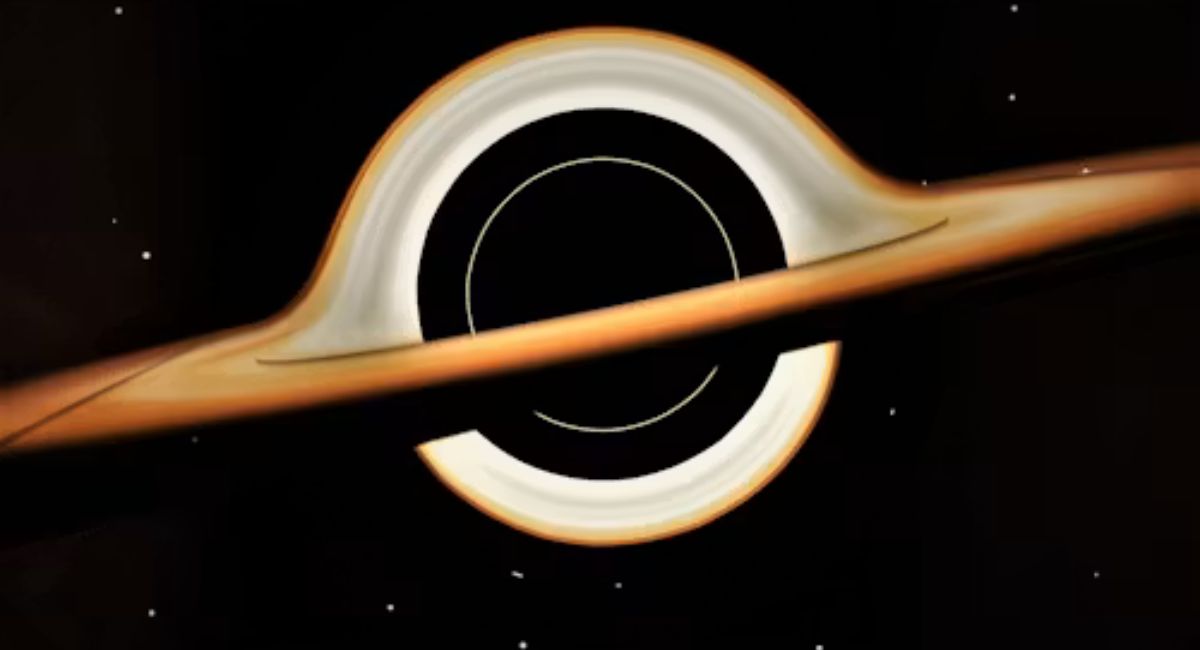
Black Hole Burps are giving scientists a surprising new look at how supermassive black holes behave long after they tear apart and consume stars. Astronomers are learning that some black holes do not simply finish a cosmic meal and go quiet. Instead, months or even years later, they can release powerful outflows of material that glow in radio waves.
These delayed signals are being described as cosmic “burps” because they appear after the main event has already faded from view. The discovery is helping researchers better understand black hole feeding habits, star destruction, and the strange ways energy moves through galaxies.
Black Hole Burps Offer New Clues About Space
The main reason Black Hole Burps matter is that they challenge the older idea that the brightest part of a black hole’s meal is always the end of the story. When a star gets too close to a supermassive black hole, gravity can pull it apart in what scientists call a tidal disruption event.
At first, this event can create a bright flash of light as stellar debris heats up near the black hole. But radio observations now show that the story may continue long after that first flash fades.
In some cases, material is later pushed outward from near the black hole. When that material crashes into surrounding gas, it creates shock waves and produces radio signals that telescopes can detect.
Why Black Holes “Burp” After Eating Stars
A black hole does not eat like a normal object. When a star is shredded, not all of the material falls directly into the black hole. Some debris forms a swirling disk. Some may be thrown outward. Some may take time to settle before it affects the area around the black hole.
That delayed behavior is what makes Black Hole Burps so interesting. Scientists believe these radio flares can happen when black holes are feeding very quickly or when their feeding rate has slowed down. In both cases, the system can still launch winds, jets, or streams of material.
This means black holes may stay active for much longer than visible light alone suggests.
A Positive Breakthrough For Astronomy
The positive side of this discovery is that Black Hole Burps give astronomers a new way to study hidden black hole activity. Radio telescopes can detect signals that are invisible to ordinary optical telescopes.
That matters because many tidal disruption events may look finished in visible light, even while important activity continues in radio waves. By watching these events for years instead of months, scientists can learn more about how black holes grow and how they affect their host galaxies.
The discovery also gives astronomers a better roadmap for future observations. If researchers can identify which star-destruction events are most likely to produce delayed radio flares, they can use telescope time more efficiently.
Serious Questions Remain About Delayed Flares
Even though Black Hole Burps are exciting, they also raise serious questions. Scientists still want to know why some black holes produce delayed radio signals while others do not.
The timing is also puzzling. If the star was destroyed months or years earlier, why does the black hole release powerful outflows later? Is the delay caused by the way debris settles into a disk? Does the black hole change feeding states? Are surrounding gas conditions important?
These questions matter because black holes are not isolated objects. Their energy can influence nearby gas, star formation, and the evolution of galaxies.
Tidal Disruption Events Help Scientists Watch Black Holes Feed
Tidal disruption events are rare but valuable because they allow scientists to watch a black hole’s feeding process almost in real time. Most supermassive black holes sit quietly at the centers of galaxies, making them difficult to study.
But when a star wanders too close, the sudden flare acts like a cosmic signal. It tells astronomers that a black hole has started feeding.
Now, delayed Black Hole Burps show that scientists may need to keep watching long after the first flare disappears. The real lesson may come years later, when radio telescopes detect the aftereffects.
Radio Telescopes Play A Key Role
Radio telescopes are essential for studying these delayed burps. Optical telescopes can catch the early bright flash, but radio telescopes can detect outflows as they interact with surrounding material.
This helps scientists measure how much energy is being released and how fast the material is moving. It also helps explain whether the black hole is launching a jet, a wind, or another kind of outflow.
Without radio observations, many of these delayed events might remain completely hidden.
Black Hole Burps Could Change Future Space Research
The study of Black Hole Burps could change how astronomers monitor cosmic events. Instead of treating tidal disruption events as short-lived flashes, scientists may now follow them for several years.
This longer view could reveal patterns that were missed before. It may also help researchers understand how supermassive black holes feed across different stages.
The findings are especially important because black holes play a major role in galaxy evolution. When they release energy, they can heat gas, push material outward, and affect how galaxies grow over time.
Strange Cosmic Feeding Habits Reveal A Bigger Mystery
Black Hole Burps may sound funny, but they point to one of the biggest mysteries in astrophysics: how black holes eat, grow, and return energy to the universe.
These delayed radio flares show that a black hole’s meal does not always end when the first light fades. Years later, the black hole may still be active, still shaping its surroundings, and still revealing new clues.
For scientists, that means every star swallowed by a black hole may be more than a one-time event. It may be a long cosmic story, with the most surprising chapter arriving years after the meal began.
Also Read About: Canadarm 2 Repairs Highlight Canada-US Space Cooperation And ISS Challenges