
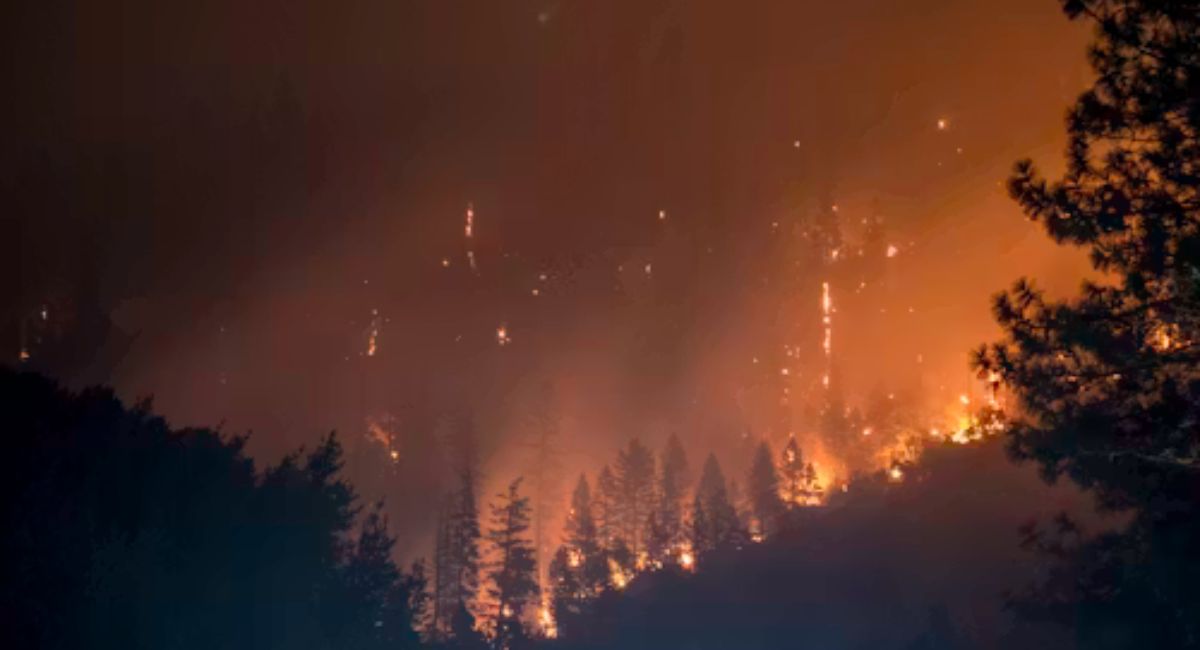
The latest Italy wildfires have triggered anger and disbelief after regional officials said animals were allegedly used to ignite and spread fires across parts of Calabria. Authorities reported finding evidence suggesting that cats had flammable material tied to their tails before being released into dry fields.
The disturbing allegations emerged as firefighters battled numerous blazes across southern Italy during a period of intense heat and dry vegetation. Officials have also identified other suspected incendiary devices, strengthening concerns that at least some of the fires were deliberately started.
Investigations remain underway, and authorities have not publicly identified or convicted those responsible. However, the reported method has intensified calls for stronger wildfire prevention, harsher penalties for arson and greater protection for animals.
What Officials Say Happened During The Italy Wildfires
Calabria Civil Protection chief Domenico Costarella said investigators discovered the remains of cats with rags soaked in flammable liquid attached to their tails. According to officials, the material was allegedly set alight before the frightened animals were released into areas containing tall grass and dry vegetation.
As the animals ran unpredictably, they could have carried flames to several locations, creating separate ignition points and making the fires more difficult to contain. Costarella described the suspected acts as inhumane and the work of a criminal mind.
Authorities also reported finding candles placed near fuel-soaked cloth and other delayed ignition systems. Such devices can allow someone to leave an area before a fire begins, complicating attempts to identify suspects.
The evidence has led regional officials to believe that human activity was responsible for many of the recent outbreaks. However, investigators must still examine individual fire sites before determining whether each blaze was caused by arson, negligence or natural conditions.
Read this also: U.S. And Saudi Arabia Sign Landmark Nuclear Cooperation Agreement Amid Safety Concerns
Firefighters Battle Multiple Blazes Across Calabria
The Italy wildfires have placed significant pressure on emergency services, particularly in Calabria and around Pollino National Park. Firefighters, aircraft crews and civil-protection teams have worked to control flames threatening forests, agricultural areas and nearby communities.
Regional fire officials recorded 164 fires over a 24-hour period, with more than two dozen reportedly still active when the figures were released. High temperatures, dry vegetation and repeated outbreaks created extremely challenging conditions for crews.
Fires were also reported in the provinces of Catanzaro, Crotone and Reggio Calabria. In one case, flames affected centuries-old olive trees on land confiscated from the ’Ndrangheta crime organization and reassigned to an anti-Mafia agricultural cooperative.
The concentration of fires across several locations has raised suspicion because naturally occurring wildfires do not always appear in such rapid succession. Nevertheless, weather conditions can greatly accelerate even a small fire once it begins.
Dry grass, strong winds and prolonged heat can transform a limited ignition into a fast-moving emergency. That means deliberate acts, carelessness and dangerous weather may combine to produce much greater destruction.
Animal Welfare Groups Demand Accountability
Reports that cats may have been used to spread the Italy wildfires prompted an immediate response from animal welfare organizations.
The Italian Association for the Defense of Animals and the Environment announced plans to file criminal complaints with prosecutors across Calabria. It also offered a €1,000 reward for information leading to the identification and final conviction of anyone who used cats or other animals to start or expand wildfires.
Animal advocates described the alleged method as both extreme cruelty and a serious public-safety threat. An animal used in this way would experience severe suffering while also carrying flames into unpredictable areas.
The allegations have therefore created two connected criminal concerns: the deliberate destruction caused by wildfire and the intentional mistreatment of animals.
Campaigners are urging witnesses to contact law enforcement rather than spread unverified claims on social media. Reliable evidence, including photographs, recordings, vehicle details or unusual activity near ignition sites, could assist investigators.
Officials have not confirmed how many animals may have been involved or whether the reported discovery represents an isolated incident. That distinction will be important as investigators attempt to understand the scale and organization of the suspected arson.
Why Arsonists May Start Wildfires
The motives behind deliberate Italy wildfires can vary widely. Some fires may be connected to personal disputes, vandalism, attempts to clear land or efforts to create seasonal firefighting work. Others may involve organized criminal or commercial interests.
Previous investigations in southern Italy have examined whether criminal networks benefited from burned land, emergency contracts or changes in the use and value of property. Reports have also linked earlier wildfire cases in Sicily and near Mount Vesuvius to allegations that animals were used as moving ignition devices.
However, the existence of earlier allegations does not prove that organized crime is responsible for the current fires in Calabria. Investigators will need evidence connecting specific individuals or groups to particular ignition sites.
Determining motive is often difficult because wildfire scenes can destroy physical evidence. The movement of flames, firefighting operations and changing weather conditions may further complicate reconstruction.
Italy’s National Fire Investigation Unit uses a scientific process that includes preserving the scene, identifying the likely area of origin, collecting physical samples and examining potential ignition sources. Investigators may also interview witnesses and conduct laboratory testing before deciding whether a fire was accidental or deliberate.
Heat And Dry Vegetation Increase The Danger
Although officials suspect arson in several cases, human action alone does not explain the intensity of the current Italy wildfires.
Periods of extreme heat can remove moisture from soil and vegetation, leaving grass, bushes and forests highly flammable. Strong winds can then carry sparks across roads, firebreaks and other barriers.
A wet winter may also produce additional vegetation. Once that growth dries during repeated heatwaves, it becomes fuel that can help fires spread rapidly. European wildfire monitoring data indicated that the continent’s 2026 fire season remained above the long-term average despite some measures showing improvement compared with particularly severe years.
Research into Mediterranean wildfires has identified temperature, drought and atmospheric dryness as important factors affecting fire occurrence and spread. These conditions do not necessarily start a fire, but they can make any ignition far more destructive.
This distinction is important. Climate and weather conditions can increase wildfire risk, while arson or negligence may provide the initial spark. Effective prevention must therefore address both environmental hazards and criminal behaviour.
How Authorities Can Prevent Future Italy Wildfires
Preventing future Italy wildfires will require stronger surveillance, faster detection and cooperation from local communities.
Authorities can use patrols, cameras, drones and satellite monitoring to identify smoke or suspicious activity before a fire becomes uncontrollable. Restricting access to high-risk areas during extreme conditions may also reduce deliberate and accidental ignitions.
Clearing dry vegetation near roads, homes and agricultural land can slow the movement of flames. Well-maintained firebreaks and emergency access routes also give crews more opportunities to contain a blaze.
Law enforcement agencies must simultaneously investigate suspected arson and pursue those responsible. Successful prosecutions may discourage future offences, especially when supported by visible monitoring and meaningful penalties.
Public reporting is equally important. Residents who notice abandoned containers, burning material, suspicious vehicles or people entering restricted areas should contact emergency services promptly without confronting possible suspects.
The allegations involving cats have made the latest fires especially shocking. Yet the wider challenge remains protecting communities, wildlife and natural areas from a combination of criminal activity and increasingly dangerous fire conditions.