
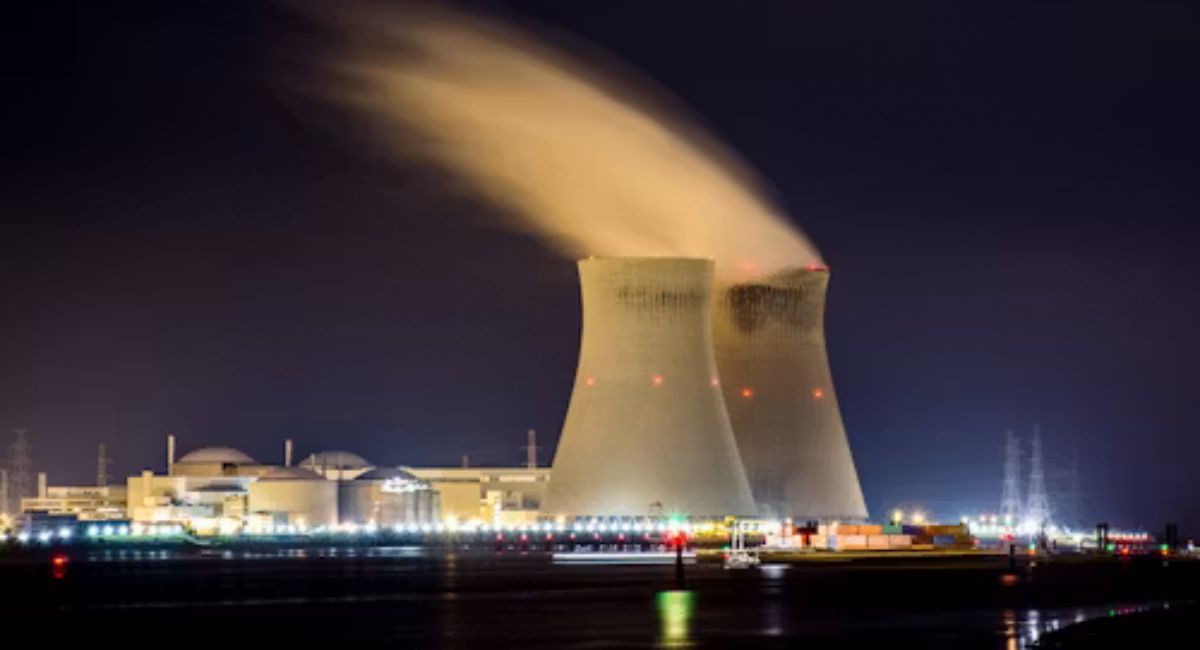
The United States and Saudi Arabia have signed a landmark civilian nuclear deal intended to deepen their energy partnership and support the kingdom’s plans to develop nuclear power. The U.S.-Saudi nuclear cooperation agreement creates a legal framework for American companies, technology providers and government agencies to participate in Saudi Arabia’s emerging nuclear energy sector.
Signed on July 22, 2026, by U.S. Energy Secretary Chris Wright and Saudi Energy Minister Prince Abdulaziz bin Salman, the agreement is commonly known as a Section 123 agreement. It is accompanied by a bilateral safeguards arrangement and is expected to support a decades-long partnership potentially worth billions of dollars.
Supporters describe the deal as an important step toward energy diversification, commercial cooperation and stronger diplomatic ties. However, the possibility that Saudi Arabia could eventually enrich uranium or process spent nuclear fuel has raised serious questions about inspections, proliferation risks and regional security.
What Is The U.S.-Saudi Nuclear Cooperation Agreement?
The U.S.-Saudi nuclear cooperation agreement establishes the legal foundation required for significant civilian nuclear trade between the two countries. Under Section 123 of the U.S. Atomic Energy Act, such an agreement must be in place before the United States can transfer certain nuclear materials, equipment or sensitive technologies to another nation.
The agreement does not immediately give Saudi Arabia nuclear reactors or unrestricted access to sensitive technology. Instead, it sets the conditions under which future projects, contracts, technical exchanges and nuclear fuel arrangements may be considered.
The U.S. Department of Energy said the partnership would advance economic and strategic goals while maintaining commitments to peaceful nuclear activity and nonproliferation. American nuclear businesses could gain access to major construction, engineering, fuel and maintenance contracts if Saudi Arabia moves ahead with its proposed reactor program.
Saudi Arabia has discussed building nuclear power facilities for years. The kingdom wants to reduce its reliance on oil and natural gas for domestic electricity generation while preserving more crude oil for export.
Read this also: Afghanistan Flash Floods Kill at Least 20 as More Than 100 Remain Missing
Why Saudi Arabia Wants Civilian Nuclear Power
Saudi Arabia’s interest in nuclear energy is closely connected to its wider economic transformation plans. Through Vision 2030, the government is attempting to diversify the economy, expand new industries and reduce dependence on oil revenue.
Electricity demand is high because of industrial development, widespread air-conditioning and energy-intensive water desalination. Nuclear reactors could provide large amounts of continuous electricity without directly producing carbon emissions during operation.
Civilian nuclear power could also allow Saudi Arabia to burn less oil for electricity. That would leave more petroleum available for international markets, potentially increasing export income while helping the kingdom develop a more varied domestic energy system.
The U.S.-Saudi nuclear cooperation agreement could therefore support both energy security and economic development. It may also strengthen Saudi Arabia’s access to American reactor designs, operational expertise, workforce training and nuclear safety systems.
For Washington, the agreement gives U.S. companies an opportunity to compete against nuclear suppliers from China, Russia, France and South Korea. Those countries have also shown interest in Saudi Arabia’s planned nuclear sector.
U.S.-Saudi Nuclear Cooperation Agreement Raises Safety Questions
The most controversial issue surrounding the U.S.-Saudi nuclear cooperation agreement is the treatment of uranium enrichment and spent-fuel reprocessing.
Uranium enrichment can produce low-enriched fuel for civilian reactors. However, the same basic process can be used to produce highly enriched uranium suitable for nuclear weapons if enrichment continues to much higher levels. Reprocessing spent fuel can also separate plutonium, another material that may be used in weapons.
The agreement reportedly provides a legal pathway for cooperation involving the nuclear fuel cycle, but it does not automatically require the United States to transfer enrichment or reprocessing technology. Any future proposal involving those capabilities would likely require additional negotiations, technical reviews and political approval.
Critics argue that the deal does not follow the so-called “gold standard” used in the United Arab Emirates’ nuclear agreement with Washington. Under that model, the UAE voluntarily committed not to enrich uranium or reprocess spent nuclear fuel domestically.
Saudi Arabia has not accepted the same permanent restrictions. This difference has caused concern among nonproliferation specialists and some U.S. lawmakers, particularly because nuclear fuel-cycle technology has both civilian and military applications.
Inspections And Nonproliferation Safeguards
Saudi Arabia is a member of the Nuclear Non-Proliferation Treaty, meaning it has formally committed not to develop nuclear weapons. Its nuclear facilities are also subject to international safeguards administered by the International Atomic Energy Agency.
Nevertheless, critics say basic safeguards may not be sufficient for a large and technically advanced nuclear program. They have called for more extensive inspections, stronger transparency requirements and adoption of the IAEA Additional Protocol.
The Additional Protocol gives international inspectors wider access to information, locations and activities that could indicate undeclared nuclear work. Reports about the new agreement indicate that it includes bilateral safeguards but does not require the Additional Protocol as part of the arrangement.
Supporters of the U.S.-Saudi nuclear cooperation agreement argue that American involvement could provide Washington with greater visibility into the Saudi nuclear program than it would have if Riyadh selected China or Russia as its main partner.
They also maintain that U.S. participation could encourage higher operational standards, stronger physical security and closer regulatory cooperation. Critics respond that these benefits depend on how effectively the safeguards are written, enforced and monitored over time.
Regional Security And Congressional Review
The agreement comes at a sensitive time for the Middle East. Iran’s nuclear activities have remained a major source of regional tension, while Saudi officials have previously said the kingdom would seek comparable capabilities if Iran developed a nuclear weapon.
Those statements have increased concerns that domestic enrichment in Saudi Arabia could contribute to a regional nuclear competition. Israel and other regional actors are also expected to closely examine any arrangement that gives Riyadh access to advanced fuel-cycle capabilities.
The U.S.-Saudi nuclear cooperation agreement must undergo congressional review before it can fully take effect. Members of Congress may examine its inspection requirements, enrichment provisions, technology-transfer rules and impact on U.S. nonproliferation policy.
Blocking a nuclear cooperation agreement can be politically difficult, but lawmakers may still hold hearings, request additional information or push for stronger conditions. The review process is therefore likely to become an important test of whether commercial and strategic benefits outweigh the perceived security risks.
What Happens Next?
The signing of the U.S.-Saudi nuclear cooperation agreement is the beginning of a longer process rather than the immediate launch of a nuclear power station.
Saudi Arabia will still need to select reactor suppliers, secure financing, choose construction sites and establish detailed regulatory and emergency-response systems. Individual projects may also require separate permits, export licences and commercial contracts.
Future discussions will probably focus on who supplies nuclear fuel, whether any enrichment activity will be allowed inside Saudi Arabia and how sensitive facilities would be operated. Proposals involving a U.S.-controlled or “black box” enrichment facility have been discussed, although the exact structure of any future arrangement remains uncertain.
The deal could bring major economic opportunities and help Saudi Arabia diversify its energy supply. At the same time, its long-term credibility will depend on transparent inspections, enforceable safeguards and clear limits on activities that could contribute to nuclear weapons development.