
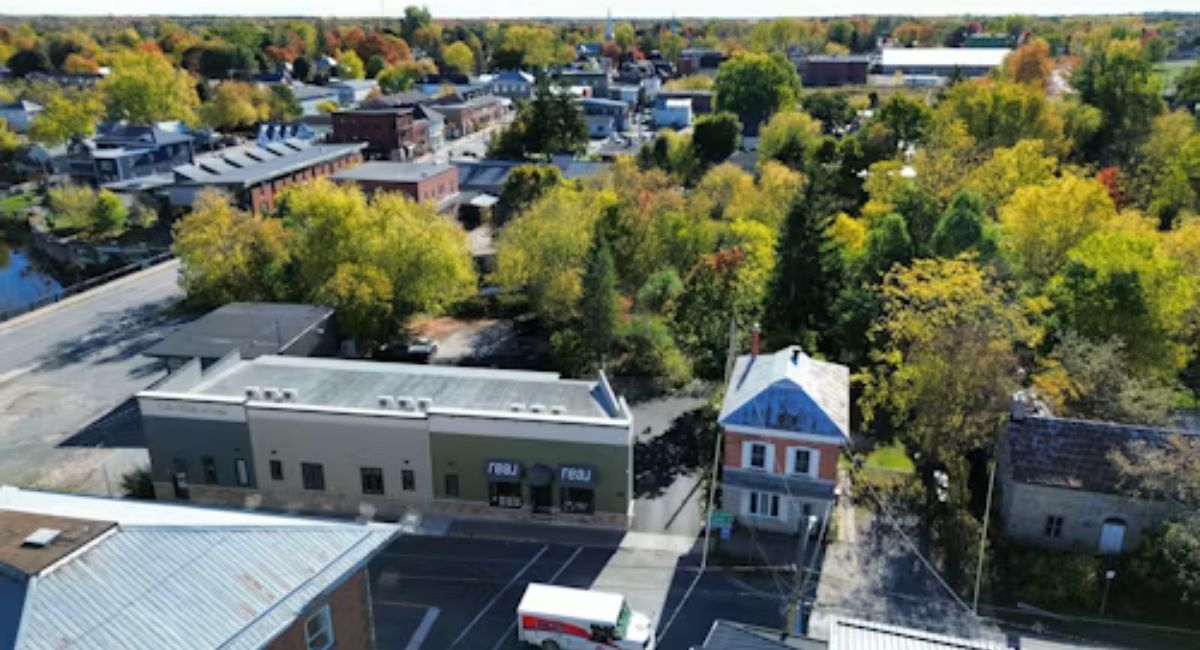
Kemptville tiny homes are emerging as a practical response to the growing shortage of affordable housing for older adults living on limited incomes. Through the Shalom Small Homes Kemptville initiative, community members, volunteers, local businesses and municipal leaders are working together to provide seniors with secure, below-market rental accommodation.
The project completed its first four independent living units in 2025 and is now raising funds to expand the development. Organizers hope to add 16 more homes over time, although construction costs, fundraising needs and the broader affordability crisis remain significant obstacles.
Rather than treating tiny homes as a temporary shelter, the initiative is designed to offer stable, long-term housing where older residents can maintain their independence and remain connected to their community.
Kemptville Tiny Homes Offer Stability For Seniors
The Shalom Small Homes project was created to support people aged 55 and older who are struggling to afford safe housing in North Grenville. Its mission is to build sustainable, compact homes and rent them at below-market rates through long-term agreements.
For seniors living on pensions or fixed incomes, predictable rent can make a major difference. Rising housing costs may force older adults to reduce spending on food, transportation, medication and other necessities. Some may also face the difficult choice of leaving a community where they have lived for many years.
Kemptville tiny homes aim to reduce that uncertainty by providing private, independent units built specifically around long-term affordability. Residents receive more than a roof over their heads. They gain stability, privacy and the reassurance that they can continue living in familiar surroundings.
The model may be especially valuable in smaller communities, where affordable rental apartments are often limited and seniors may not want to relocate to a distant city.
Also Read About: New Swimming Dock Opens Near History Museum, Expanding Waterfront Access Despite Safety Concerns
A Community-Led Approach To Affordable Housing
One of the most important features of the project is its community-based construction model. Local volunteers, tradespeople, organizations and businesses have contributed labour, professional knowledge, building materials and financial support.
The Municipality of North Grenville also supported the initial development by providing land through a 40-year lease costing the charity just $1 per year. That arrangement helped reduce one of the largest expenses associated with new housing construction.
Community participation does not eliminate all costs, but it allows the project to direct more of its available funding toward construction and housing operations.
The approach also creates a sense of shared responsibility. Instead of waiting for a single level of government or a private developer to solve the housing shortage, residents and local organizations are directly involved in building a solution.
This “neighbours helping neighbours” model has become a central part of the identity of Kemptville tiny homes.
Small Design Creates A Big Social Impact
Tiny homes use less space and generally require fewer building materials than conventional detached houses. Their compact design can also reduce heating, cooling and maintenance expenses.
For older tenants, lower operating costs are important because utility bills can place additional pressure on already limited incomes. A well-insulated, energy-efficient home may provide greater financial predictability throughout the year.
However, successful senior housing requires more than reducing square footage. Units must be comfortable, accessible and suitable for residents whose mobility needs may change.
Important design considerations can include step-free entrances, accessible bathrooms, wider doorways, safe flooring and essential living areas located on one level. Tiny-home research has noted that very small layouts can create challenges for people with mobility limitations, making thoughtful accessibility planning essential.
When these needs are addressed, compact housing can offer seniors the independence of a private residence without the maintenance demands of a larger property.
Affordability Challenges Could Limit Expansion
Despite the early success of Kemptville tiny homes, expanding the project will require substantial financial support.
Small homes are less expensive than many conventional houses, but they are not free from rising construction costs. Building materials, skilled labour, permits, site preparation, water connections, electricity and accessibility features can significantly increase the final cost.
A 2025 fundraising appeal connected to the initiative estimated that approximately $500,000 was needed to build four additional small homes. Raising $1 million could support eight units. Those figures demonstrate how even volunteer-supported developments require major financial resources.
The organization is now fundraising as it works toward a larger goal. Its current website states that it plans to build four more homes in 2026, while the broader expansion plan calls for additional units in future phases.
Donations, grants, municipal cooperation and business partnerships will likely remain critical. Without dependable funding, construction may move more slowly than the demand for housing.
Why Senior Housing Demand Continues To Grow
The need for projects such as Kemptville tiny homes reflects wider pressures facing older Canadians.
Many seniors depend primarily on pensions, retirement savings or government benefits that may not rise as quickly as market rents. At the same time, affordable units can be difficult to find, particularly in smaller towns experiencing population growth.
Some older homeowners may also struggle with property taxes, repairs and maintenance. Selling a house does not always solve the problem because suitable rental accommodation may be unavailable or too expensive.
Shalom Small Homes says many people over 55 are increasingly unable to meet the rental costs of homes they have occupied for years. The organization accepts applications from seniors who are struggling financially and need affordable accommodation.
The project therefore addresses both an economic problem and a social one. Stable local housing can help seniors preserve relationships with family, neighbours, health-care providers and community services.
Could The Kemptville Model Work Elsewhere?
The Kemptville project may provide useful lessons for other municipalities searching for affordable senior housing solutions.
Its progress has depended on several factors working together: inexpensive access to municipal land, volunteer participation, charitable fundraising and a clear focus on a specific group of residents.
Other communities could adapt these elements based on local zoning rules, land availability and housing needs. However, tiny homes should not be viewed as the only solution to the housing crisis.
Larger affordable apartment developments, supportive housing, rent assistance and renovations to existing buildings are also necessary. In March 2026, the federal government announced more than $24 million for a separate 60-unit affordable rental project at Kemptville Campus for seniors, veterans and other vulnerable residents.
Together, projects of different sizes can create a broader range of housing choices.
Kemptville tiny homes show that a small development can still deliver a meaningful impact. The first four units cannot meet the entire regional need, but they demonstrate what can happen when a community combines land, volunteer labour, fundraising and long-term planning.
As the organization works toward its next phase, its greatest challenge will be maintaining affordability while securing enough money to build additional homes. Its progress could help determine whether similar community-led projects become a larger part of Canada’s senior housing strategy.