
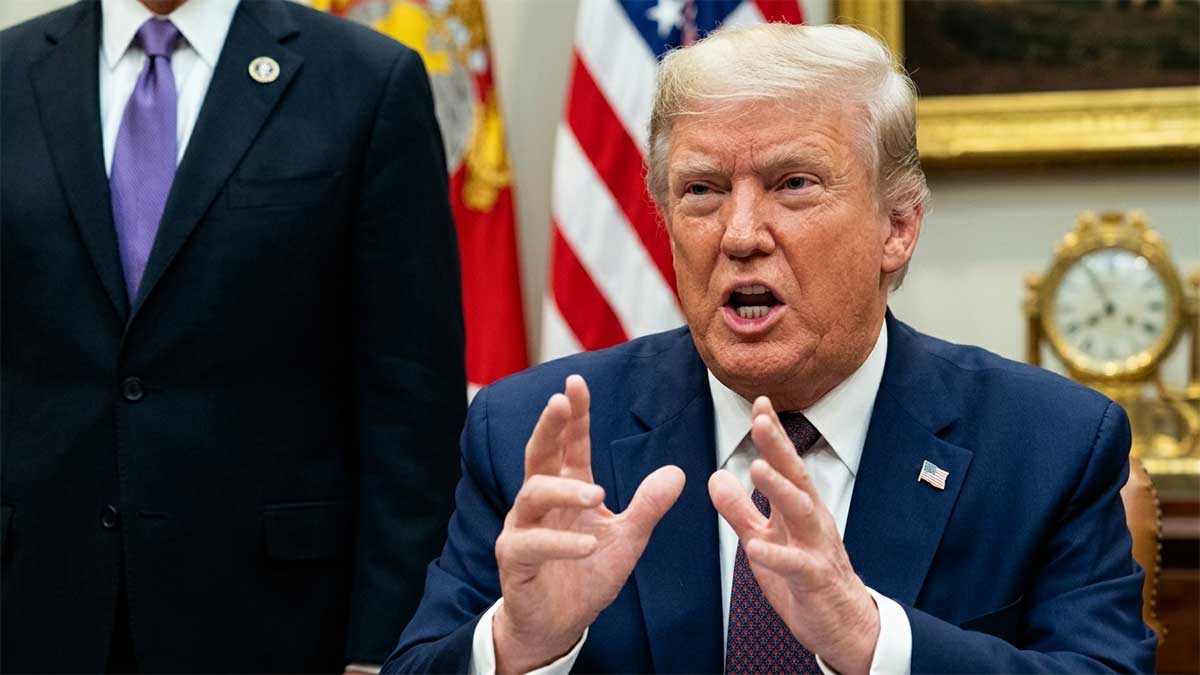
As the conflict between the United States and Iran reached its 33rd day, Donald Trump addressed the nation from the White House, suggesting that the war may soon be nearing its conclusion. While the president emphasized strong military gains, his remarks also revealed a willingness to scale back objectives and potentially leave unresolved challenges behind.
Trump Declares Progress but Stops Short of Final Victory
In a nationally televised address, Trump described the military campaign as highly successful, highlighting what he called rapid and decisive victories. He indicated that remaining operations could conclude within two to three weeks, asserting that the United States was close to fulfilling its core objectives.
Despite this optimistic tone, the speech lacked specific updates on military developments or strategic milestones. There was also only a brief mention of diplomacy, with no detailed plan for negotiations or a formal end to hostilities.
Shifting Goals and Strategic Adjustments
One of the most notable aspects of Trump’s remarks was a shift in priorities. Earlier in the conflict, a key objective had been to secure control over Iran’s stockpile of highly enriched uranium. However, the president now suggested that direct control may no longer be necessary.
Instead, he stated that these nuclear sites are under continuous satellite monitoring, allowing the United States to respond quickly if Iran attempts to access them. This repositioning signals a broader effort to reduce the scope of U.S. involvement while maintaining oversight capabilities.
Avoiding Escalation with Ground Forces
Trump also avoided any commitment to deploying U.S. ground troops, despite reports that thousands of American forces have been positioned in the region. His omission suggests a deliberate effort to prevent further escalation and limit the conflict to air and strategic operations.
This approach aligns with a broader pattern in his messaging, emphasizing containment and rapid disengagement rather than prolonged military engagement.
Strait of Hormuz and Global Energy Concerns
The president addressed the ongoing disruption in the Strait of Hormuz, a critical route for global oil shipments currently under Iranian control. Rather than committing U.S. forces to secure the passage, Trump called on other nations—particularly those more dependent on Middle Eastern oil—to take responsibility.
He suggested that the situation could resolve itself once the conflict subsides, expressing confidence that the strait would reopen naturally after hostilities end.
Mixed Messaging Before the Speech
Leading up to the address, Trump had delivered conflicting signals about the direction of the war. In a social media post, he had taken a more aggressive stance, stating that military action would continue until the Strait of Hormuz was fully reopened and threatening severe consequences for Iran.
However, in a separate interview, he indicated that the conflict could end quickly and that future military action might be limited to targeted strikes if necessary. Ultimately, his official address aligned more closely with the latter, suggesting a desire to de-escalate.
Public Opinion and Political Pressure
Domestic sentiment appears to be influencing the administration’s approach. Polling data shows declining support for the war effort among Americans. Surveys conducted in late March indicate that only about one-third of respondents approve of the decision to launch attacks.
Additionally, a majority of Americans believe the conflict should end soon, even if not all objectives are achieved. This view extends across party lines, with a significant portion of Republican voters also expressing concern.
Trump’s overall approval ratings have also declined, falling to the mid-30 percent range in multiple polls. These numbers reflect growing unease among voters, particularly as the country approaches midterm congressional elections.
Ongoing Conflict Across the Region
Despite indications that the war could wind down, active combat continues across multiple fronts. Airstrikes have hit Tehran, producing visible damage and smoke over the capital. Iran has launched missile attacks targeting locations in Israel, coinciding with the beginning of the Passover celebrations.
In addition, Israel has carried out strikes in Lebanon, while Iranian forces have targeted the United Arab Emirates. These developments highlight the broader regional implications of the conflict.
According to U.S. Central Command, American forces have conducted approximately 12,300 strikes on targets within Iran since the war began, underscoring the scale of the military campaign.
Conclusion
President Trump’s latest address reflects a complex moment in the Iran conflict, balancing claims of military success with a clear desire to bring operations to a close. While the administration appears eager to avoid deeper involvement, key issues—including regional stability, nuclear oversight, and energy security—remain unresolved. As fighting continues and public pressure grows, the coming weeks will be critical in determining whether the conflict truly winds down or takes another turn.
FAQs
1. What did Trump say about the war with Iran?
He stated that the United States is close to achieving its military goals and suggested the conflict could end within weeks.
2. Has the U.S. changed its objectives?
Yes, controlling Iran’s enriched uranium appears to be less of a priority, with monitoring now seen as sufficient.
3. Will U.S. ground troops be deployed?
There was no indication of ground troop deployment, suggesting the U.S. aims to avoid escalation.
4. Why is the Strait of Hormuz important?
It is a key global oil route, and disruptions there can significantly impact energy prices worldwide.
5. What is the public opinion on the war?
Support has declined, with many Americans calling for the conflict to end soon.